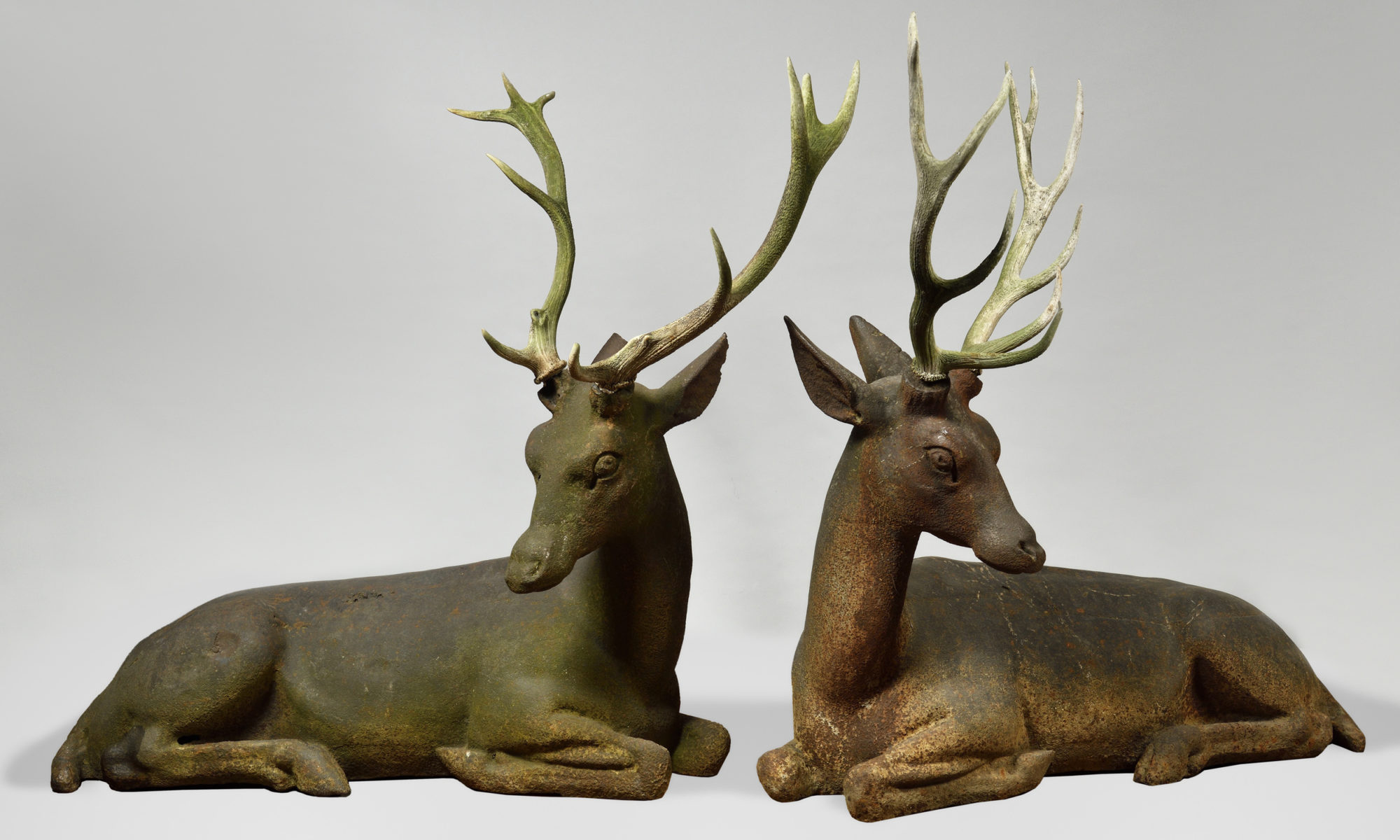
Pair of lying deers
Iron cast and the antlers later
Small perforations due to rust
Late 17th century
H 55,1 in W 67,3 in D 41,3 in
Pair of lying deers
Iron cast and the antlers later
Small perforations due to rust
Late 17th century
H 55,1 in W 67,3 in D 41,3 in
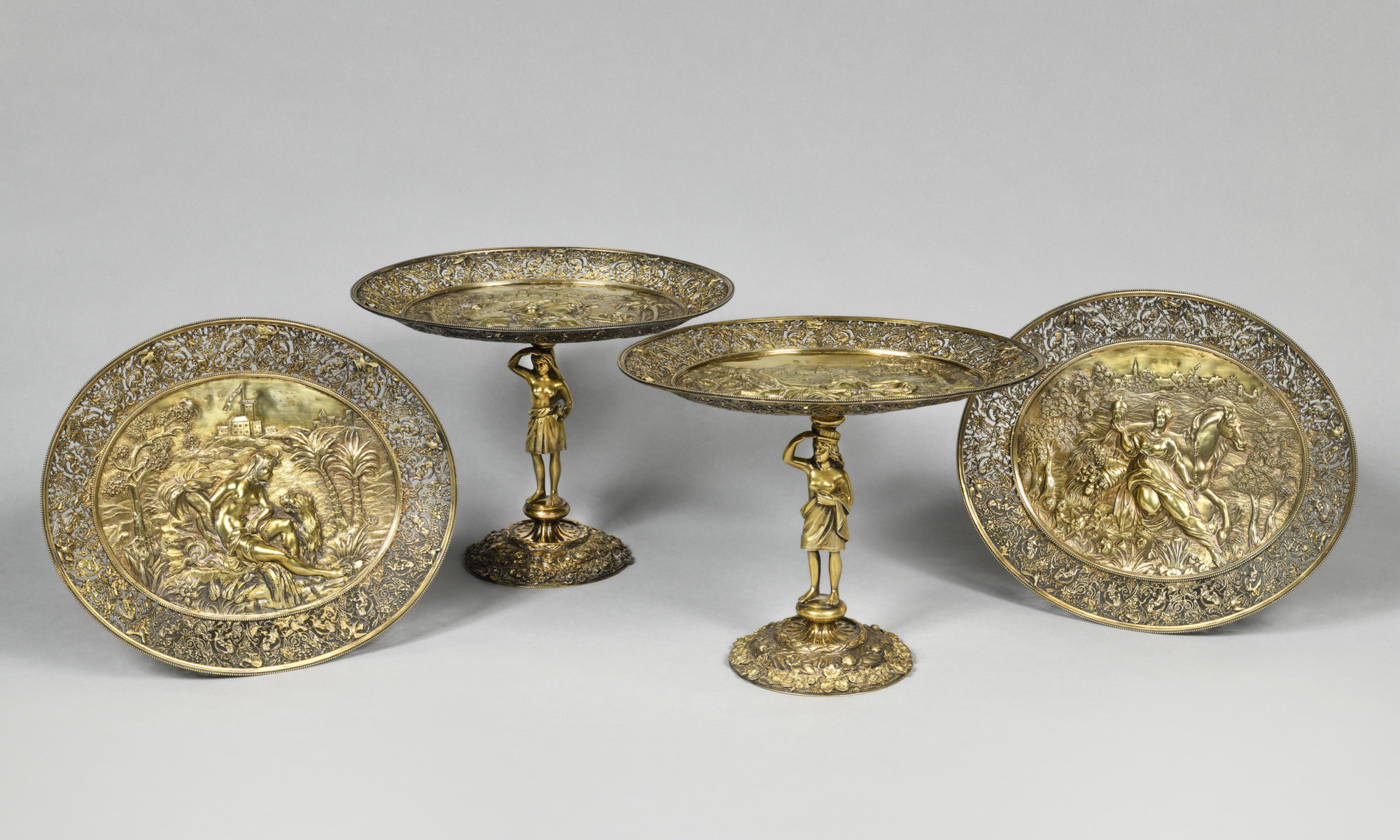
Set of four gilt vermeil tazza with a very fine chiseling representing the four continents
D’après les gravures de Crespin de Passe de Oude, dont une série est conservée au Musée du Nouveau Monde de La Rochelle (ref P1T4R171421).
19th century in the taste of Renaissance
H 9 in Top 11,8 x 10,2 in
Stamped 13 and an anchor
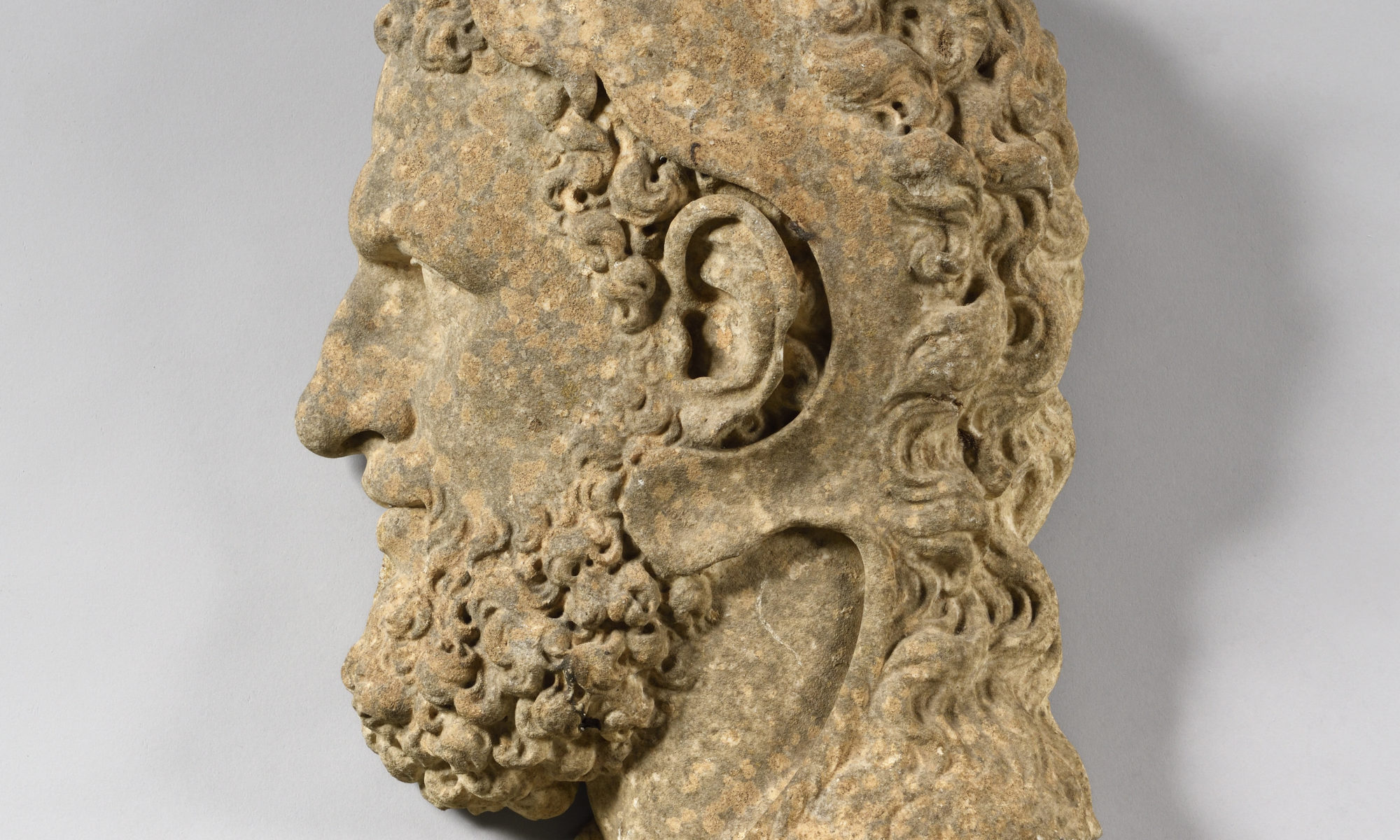
Profil d’Hercule coiffé de la peau du lion de Némée
17th century period
Marble and modern setting
H 18,5 in W 11,8 in D 27,5 in
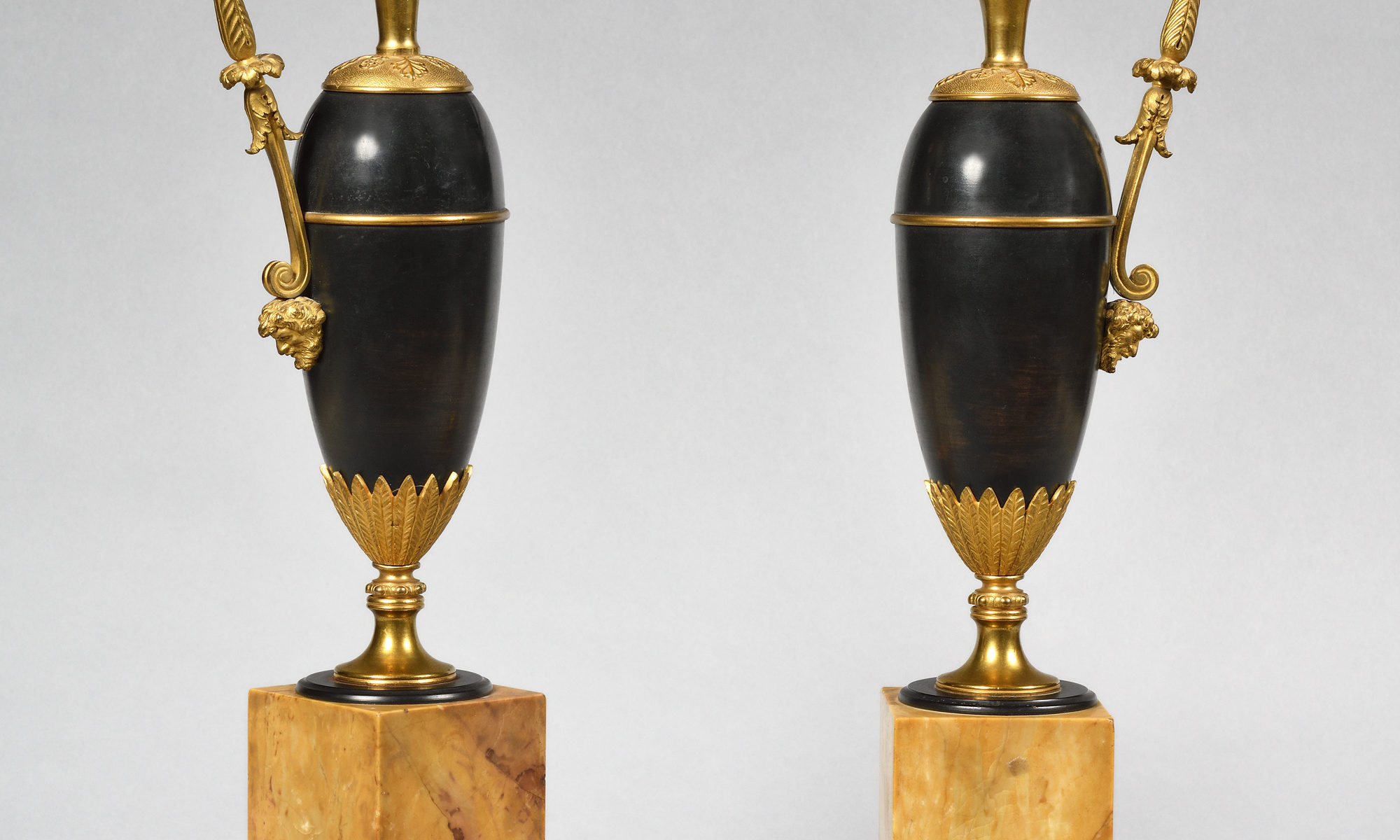
Attributed to André-Antoine RAVRIO (1759-1814), received master founder in 1777 Pair of ewers in patinated, gilded, and chiseled bronze, on yellow Siena marble bases. The handle surmounted by a griffin's head biting the neck of the ewer, and terminated by a volute resting on a satyr's mask. Decorated with a frieze of lotus leaves; all on a pedestal.
Epoque 19th century
Dimensions: H: 20,3 in - Base 4,9 x 4,9 in.
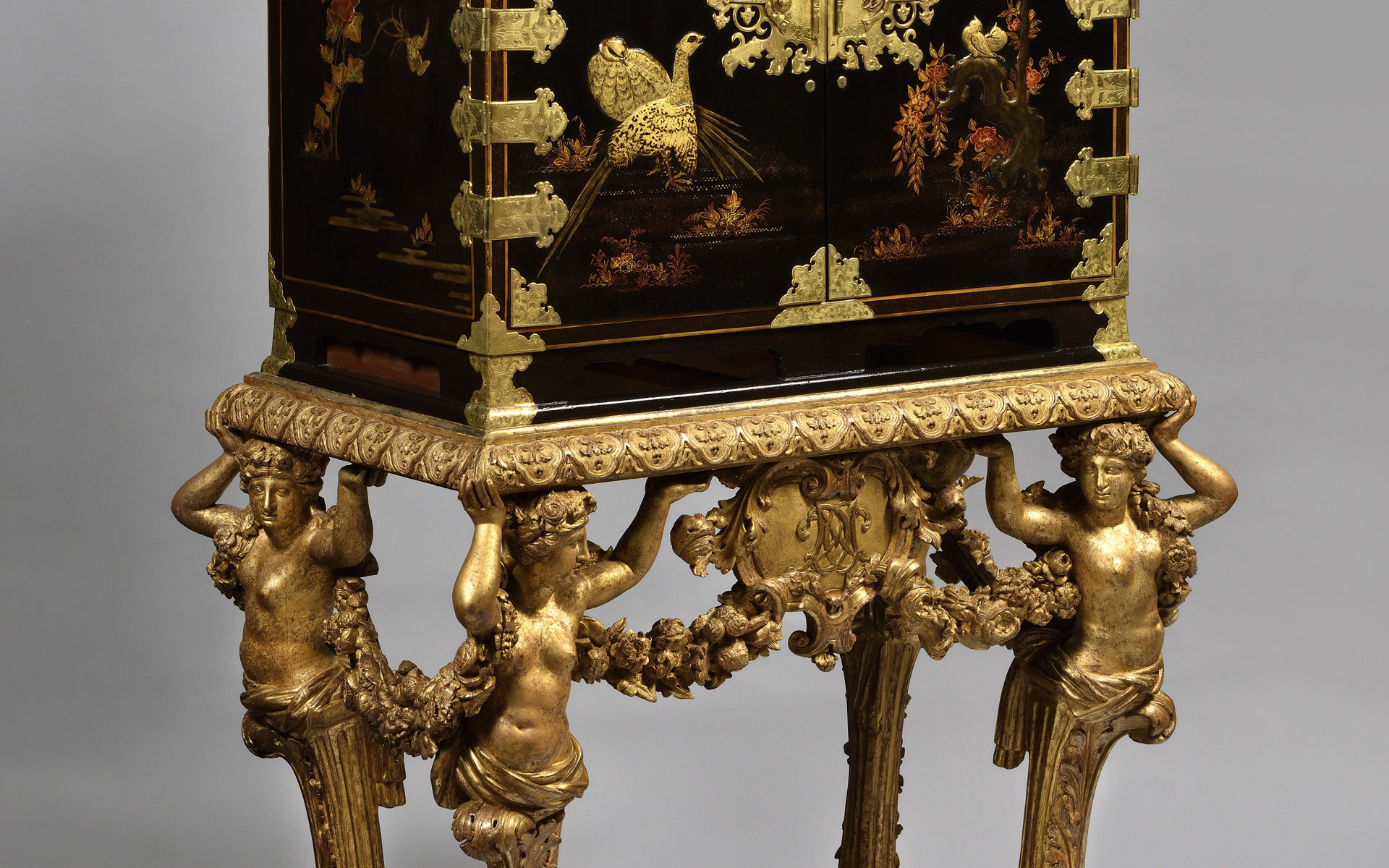
Exceptionnel cabinet en laque du Japon d’époque Edo, sur un piètement en bois sculpté et doré. Paris, époque vers 1685
Etiquette de garde-meuble Royal Country Depositery, découpage d’un catalogue de vente comprenant la mention manuscrite Collection of Duke of Sussex.
Provenance Jean-Jacques Charron de Ménars (1644-1718) Collection du prince Augustus Frederick, duc de Sussex (1773-1843) Vente de ses collections, Christie and Manson, 1843
Collection privée, Angleterre
Dimensions : - Cabinet H 31 in - W 36,4 in - D 20,5 in - Stand : H 34,6 in - W 43,3 in - D 27 in - Total : H 65,7 in - W 43,3 in - D 27 in
The Japanese lacquer cabinet, decorated with animated landscapes with partridges, herons and birds. The two front doors, with lanceolate hinges and wide ormolu phoenix keyways, reveal an interior of ten lacquered drawers. Reinforced corners and angles. Flanked by carrying handles on the sides. The lacquers feature gold and silver cameo decoration with strong reliefs, and red reinforcements on the flowers.
It stands on a richly carved gilded wood base. Beneath a carved moulding adorned with lambrequins, the belt features a figure in a cartouche with contours adorned with plant motifs and wide garlands of carved flowers. It rests on four sheathed legs sculpted with caryatids on which garlands of flowers wrap, and linked by an X-shaped brace. All on wide lion paws.
Marque d’un Kanji à l’encre au dessous du cabinet ; et une étiquette descriptive rédigée en anglais sur le revers du vantail droit portant la mention manuscrite « collection Duke of Sussex ».
Our gilded wood base is decorated with a figure in a cartouche in the centre of the belt. This monogram consists of the interlaced letters CCJJM. The quality of this piece of furniture makes it possible to link this cypher to that of Jean-Jacques Charron, Marquis de Ménars (1643-1718), President of the Paris Parliament and Superintendent of the Queen's household, but also and above all Colbert's brother-in-law. This monogram was applied on numerous occasions, notably between the nerves of volumes in his library, which he is best known for the extraordinary wealth of his library after the purchase of that of President Jacques-Auguste de Thou in 1680.
The Marquis de Ménars stayed at the Hôtel de Ménars on rue de Richelieu, which has now disappeared, as well as at his Ménars estate, which was later acquired by Madame de Pompadour.
Our cabinet and its base would almost certainly have adorned one of these two houses, an important element in the décor in vogue at the time and a sign of high social status.
The most striking feature of this beautiful base is the extraordinary richness of its carved elements. It is therefore entirely possible to draw comparisons with the carved bases of cabinets made by the greatest cabinet-makers of the period, such as Domenico Cucci, Pierre Gole and even Charles Boulle. Indeed, the caryatid figures at the four corners, which literally seem to support the top on which the cabinet rests, bear a strong resemblance to the legs of Charles Boulle's great cabinets, such as the one in the Duke of Buccleuch's collection at Drumlanrig Castle or the one in the Paul Getty Museum.
These great Parisian cabinet-makers often worked to the designs of Charles Le Brun and Jean Le Pautre, who around 1650-1660 developed this type of base for tables, consoles and cabinet supports, consisting of figures in the round in place of legs to support the top.
An engraving by Jean Lepautre, dated around 1650-1660 and held by the Bibliothèque Nationale de France, shows a rich cabinet with a base that bears many similarities in terms of the carved figures, flower garlands, lion paw feet and overall shape.
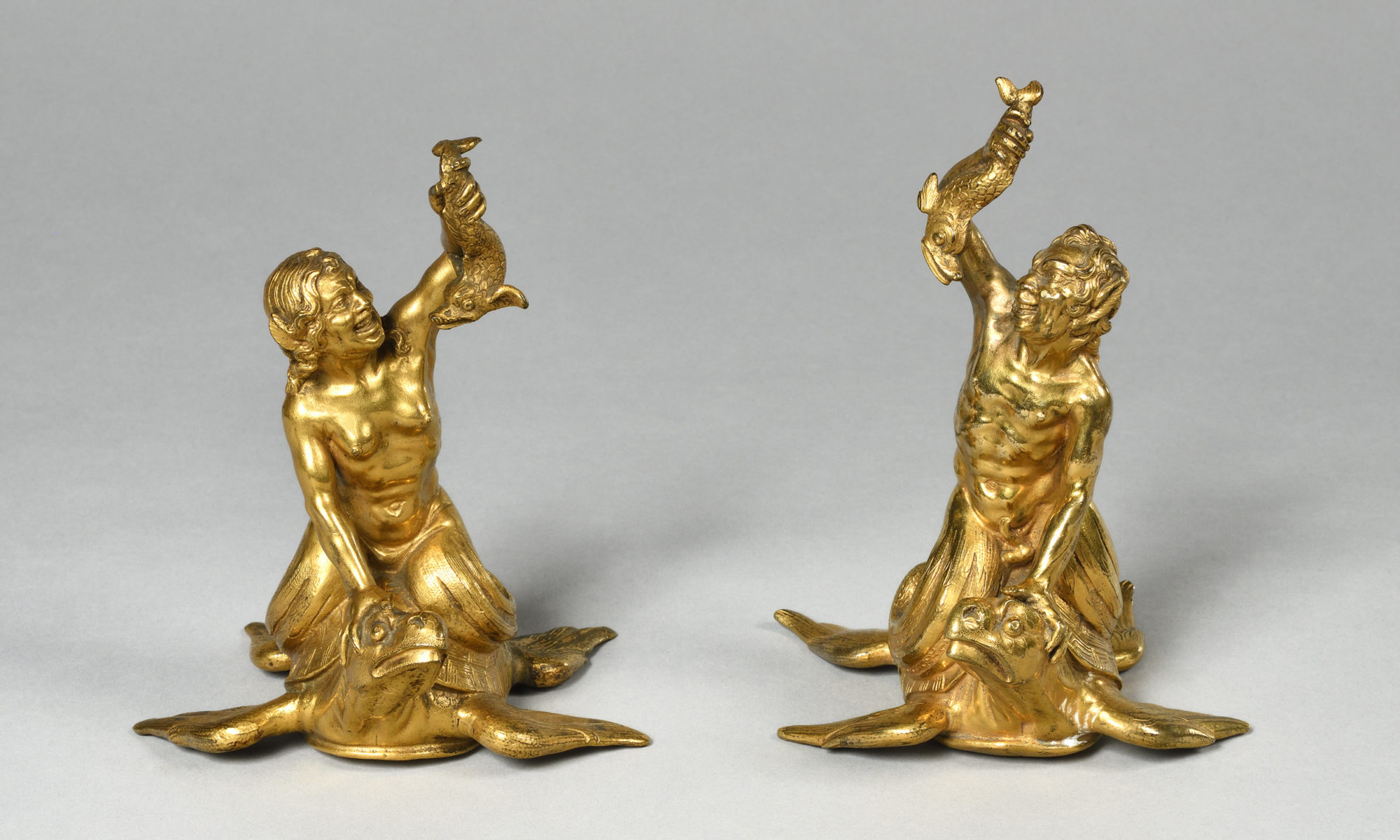
Le sculpteur Francesco Ladetti, dit Charles-François Ladatte (1706-1787), et le bronzier Giovanni Paolo Venasca, Triton et tritonesse se tenant sur le dos d’une tortue, un dauphin à la main, vers 1740
Gilded bronze
H 7 in and H 6,5 in
Oeuvres à rapprocher des bronzes ornant un coffret et son piètement en nacre et bronze doré réalisé par l’ébéniste Pietro Piffetti (1701-1777) en collaboration avec Ladatte et Venasca, conservé au Victoria & Albert Museum de Londres
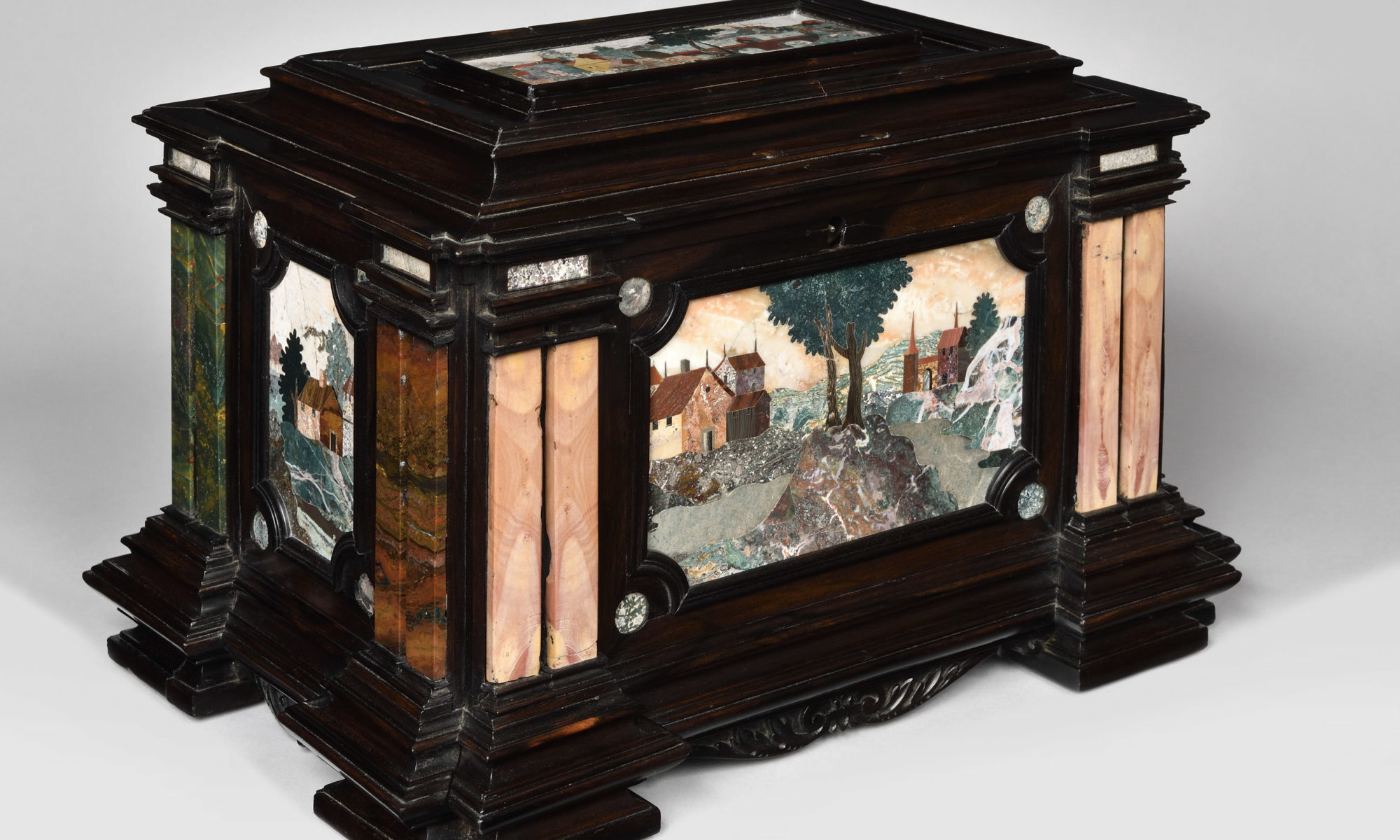
A rare ebony and pietra dura box with four polychrome panels depicting landscapes. Made from semi-precious stones : agates, jasper from Bohemia and calcedony. Attributed to Cosimo CASTRUCCI (1536_1636), who worked in Florence and Prague.
Prague, circa 1610
Imperial workshop of Rudolf II
H10-W15,3-D10,4 inches
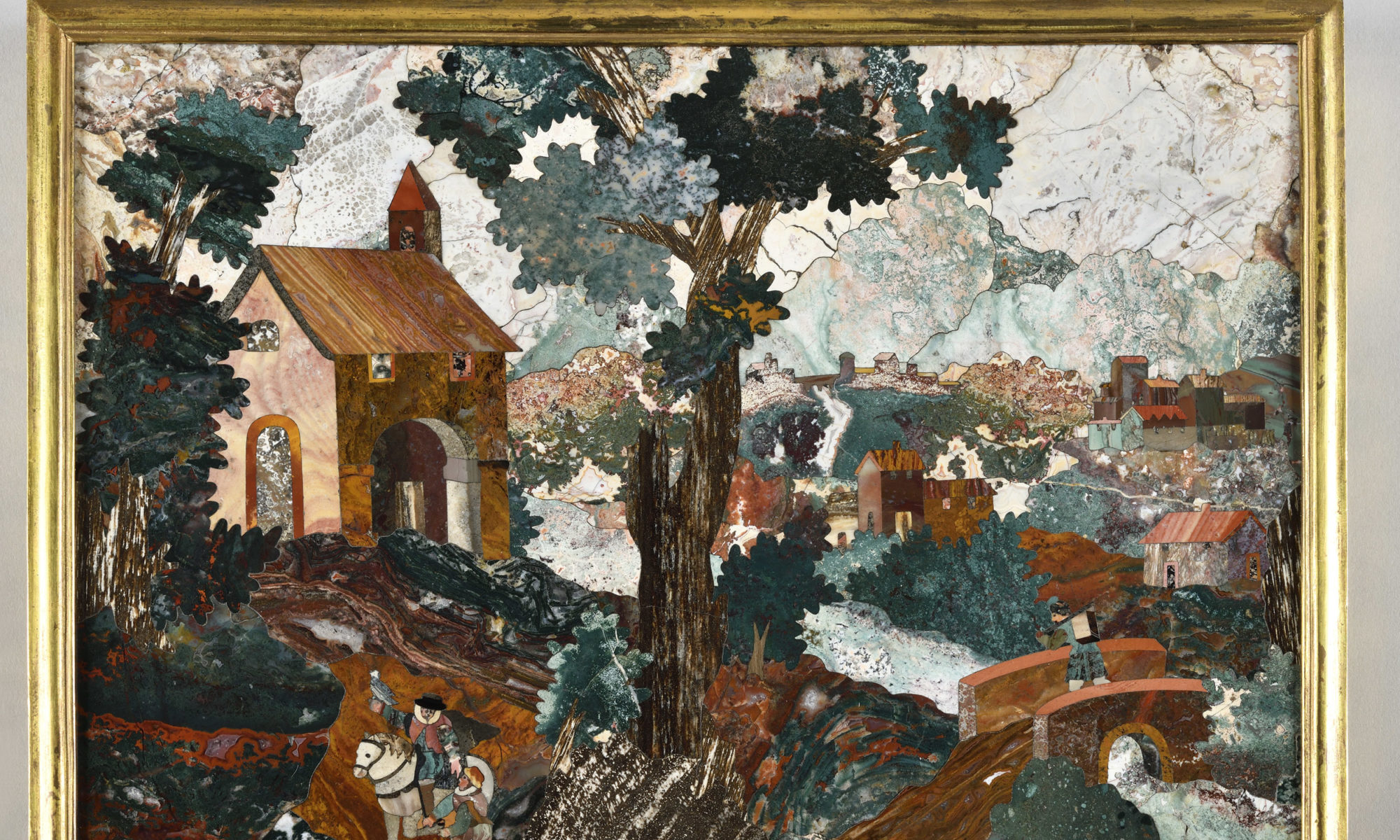
Attribué à Cosimo CASTRUCCI (1536-1636), actif à Florence et Prague, « Marqueteur de pierres dures de sa majesté l’Empereur » dès 1592. Rare plaque en marqueterie de pierres dures, dite « commesso di pietre dure » ; agates, jaspes de Bohème et calcédoines, sur fond d’ardoise, dans un cadre en bronze doré.
Atelier impérial de l’Empereur Rodolphe II
Prague, circa 1600-1610
Dimensions : H22,5 – L31 cm
Originaire de Florence, la famille Castrucci travaillait dans les ateliers de Ferdinand Ier de Médicis(r.1587-1609), grand-duc de Toscane. Grand mécène et collectionneur érudit, l’Empereur Rodolphe II (1552-1612), Prince de la Maison des Habsbourg, Roi de Bohème et Empereur des Romains, y envoyait ses pierres les plus extraordinaires afin qu’elles soient incorporées dans de somptueuses créations.
L’Empereur vouait une passion aux pierres dures auxquelles il reconnaissait des propriétés physiques et surnaturelles ; c’est ainsi qu’il invita Cosimo Castrucci et sa famille à venir s’installer à Prague pour y créer l’atelier impérial de tailleurs de pierres. Cet objet témoigne de leur virtuosité dans cet art alors en pleine apogée.
Les « commessi di pietre dure » sont des tableaux composés de pierres semi-précieuses taillées et incrustées, selon le mode de l’ « intarsia ». Cette technique qui remonte à l’Antiquité connut son apogée à la fin du XVIème siècle à Florence avec la commande par les Cours princières d’objets rivalisant de préciosité.
Ainsi les rares objets tels que panneaux ou coffrets connus appartiennent aux collections muséales ou à de grandes collections privées.
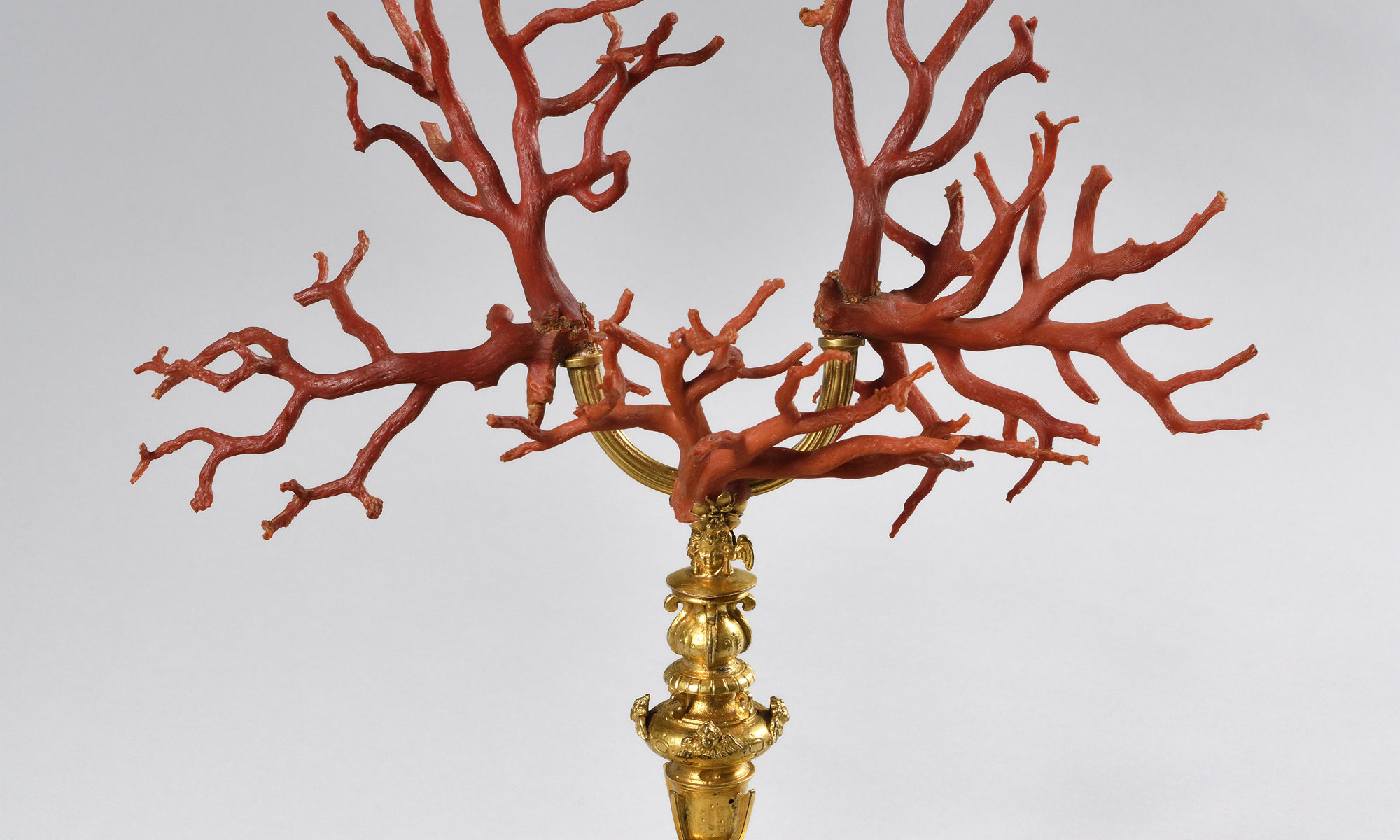
Branches de corail rouge de Méditerranée montées sur un piètement en cuivre doré de forme ovale à doucine et à décor de feuilles d’acanthe stylisées sur fond amati. Le fût est orné de quatre visages de putti ailés.
Italy, epoque early 17th century
Dimensions : H 14,9 - W 13,7 - D 6,3 inches
Note : Une aile manquante sur l’un des putti.
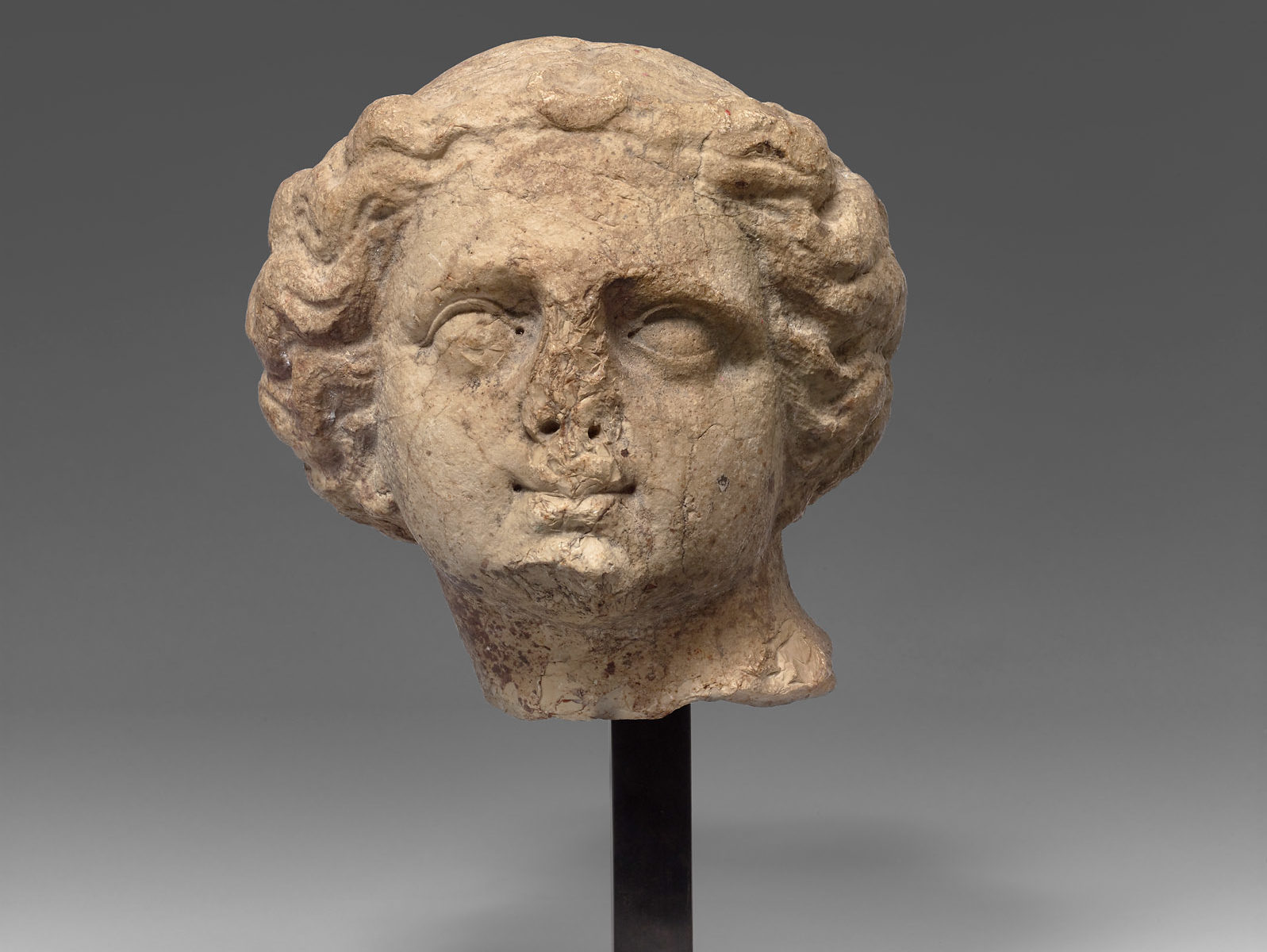
Tête de jeune femme en pierre calcaire sculptée. Probablement une représentation d’Aphrodite.
Epoque 17th century
Dimensions : H9 - with pedestal H14,5 inches

