Covered vase in carved Assouan granite, satyr heads simulating handles.
Carved with acanthus leaves.
Epoque early 18th century
Dimensions : H : 27,9 in - D : 13,4 in
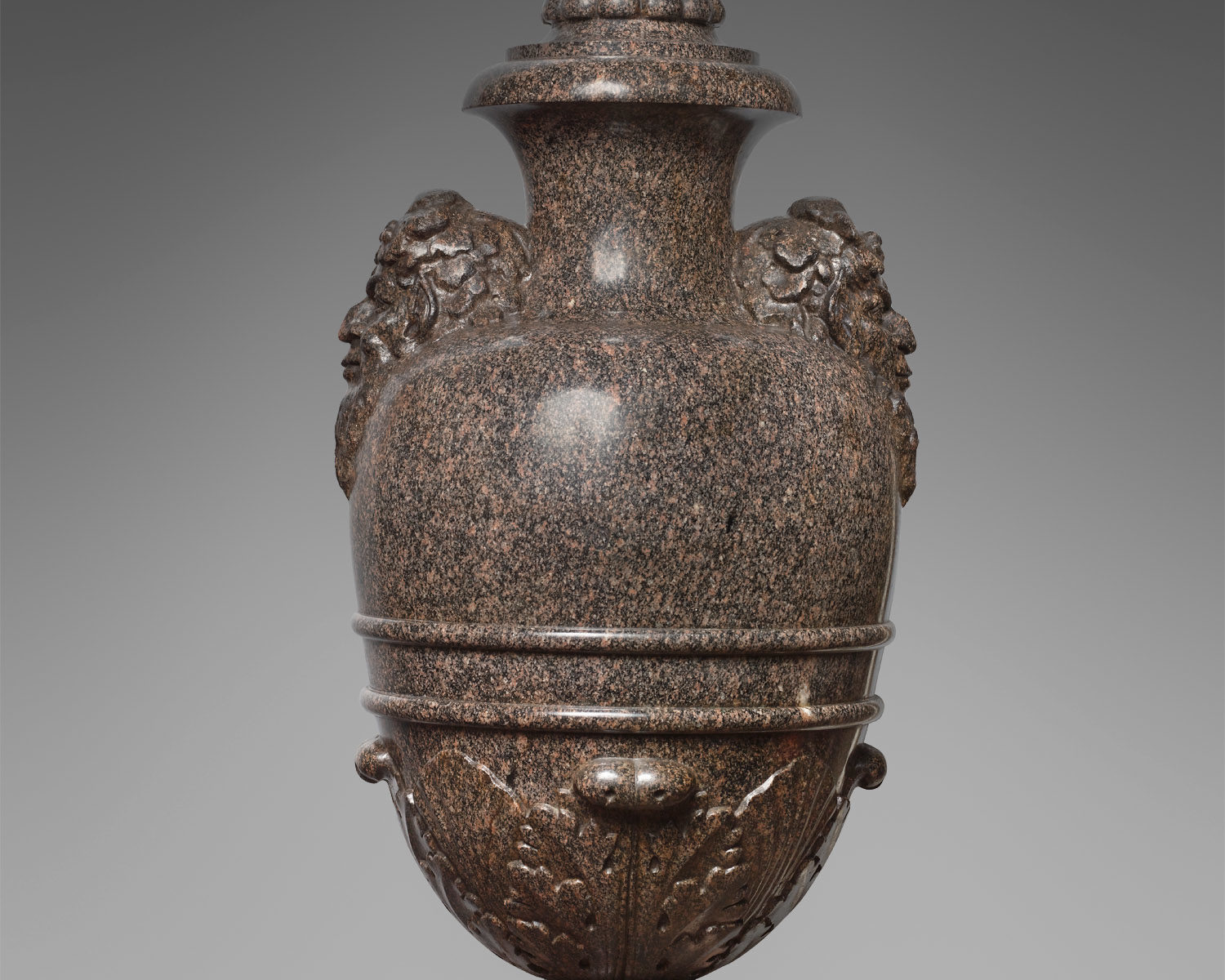
Covered vase in carved Assouan granite, satyr heads simulating handles.
Carved with acanthus leaves.
Epoque early 18th century
Dimensions : H : 27,9 in - D : 13,4 in
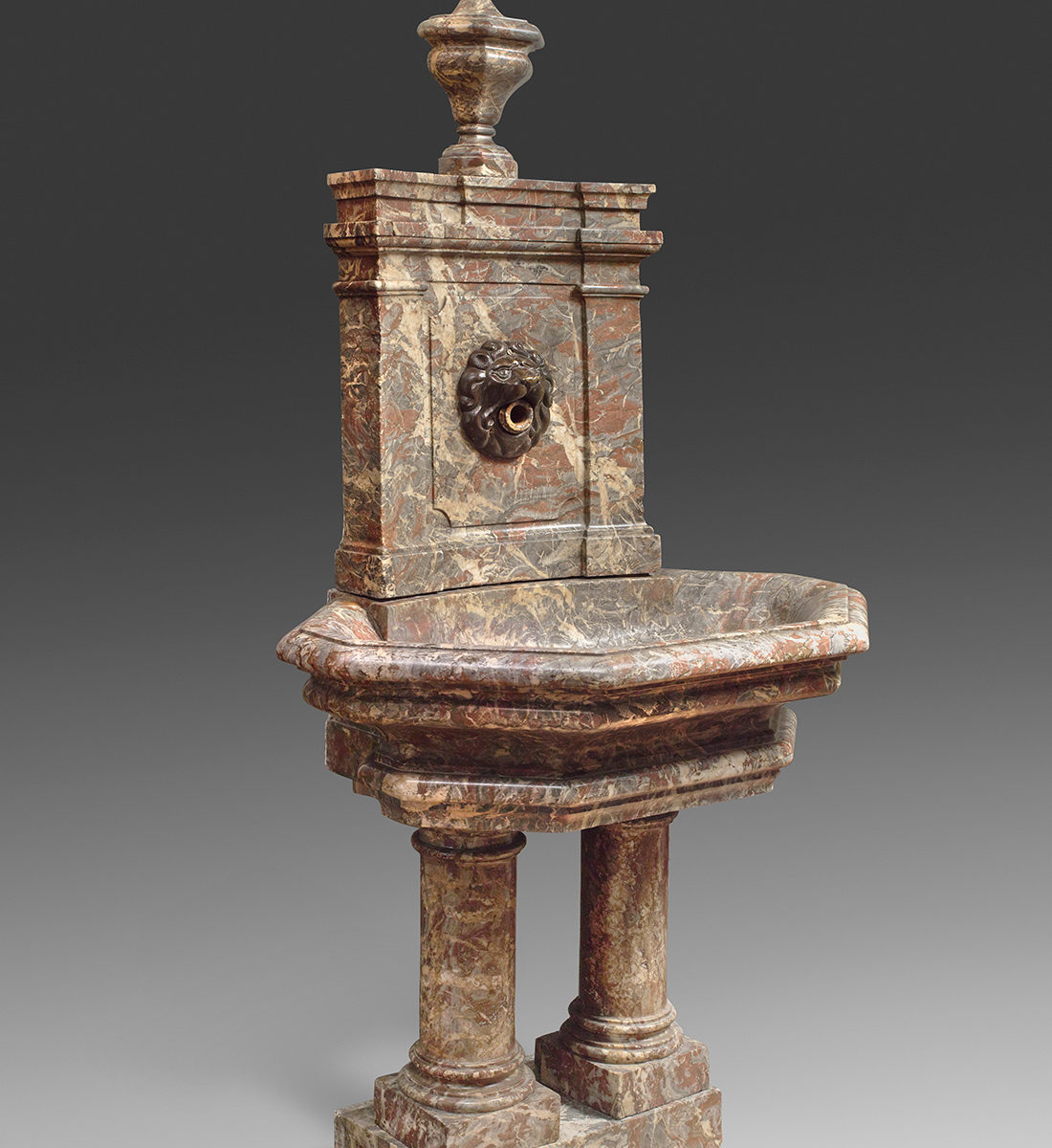
France early 18th century
Dimensions : H : 74,8 in – W : 37,8 in – D : 23,2 in
Provenance : private collection, Paris
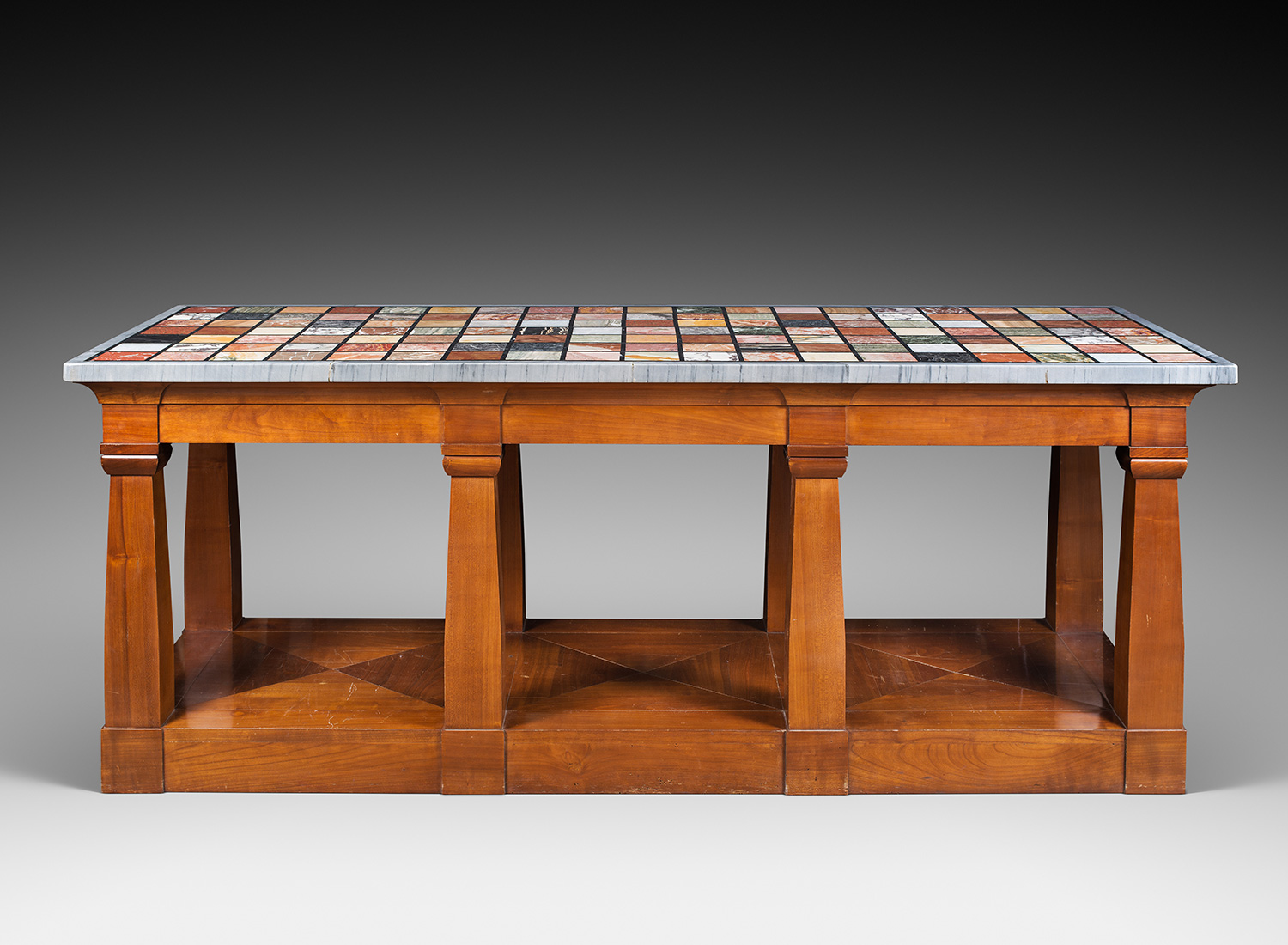
Renzo MONGIARDINO (1916-1998)
The rectangular specimens marble top, above a veneered fruitwood pedestal with eight-squared tapering legs, joined together by a large plinth.
Epoque 20th century
Dimensions : H : 33,8 in – W : 87,2 in – D : 34,2 in (the top included 1,4 in)
Provenance: former collection of Countess Francesca Vacca Agusta, owner of Villa Altachiara, in Porto Fino, Italy
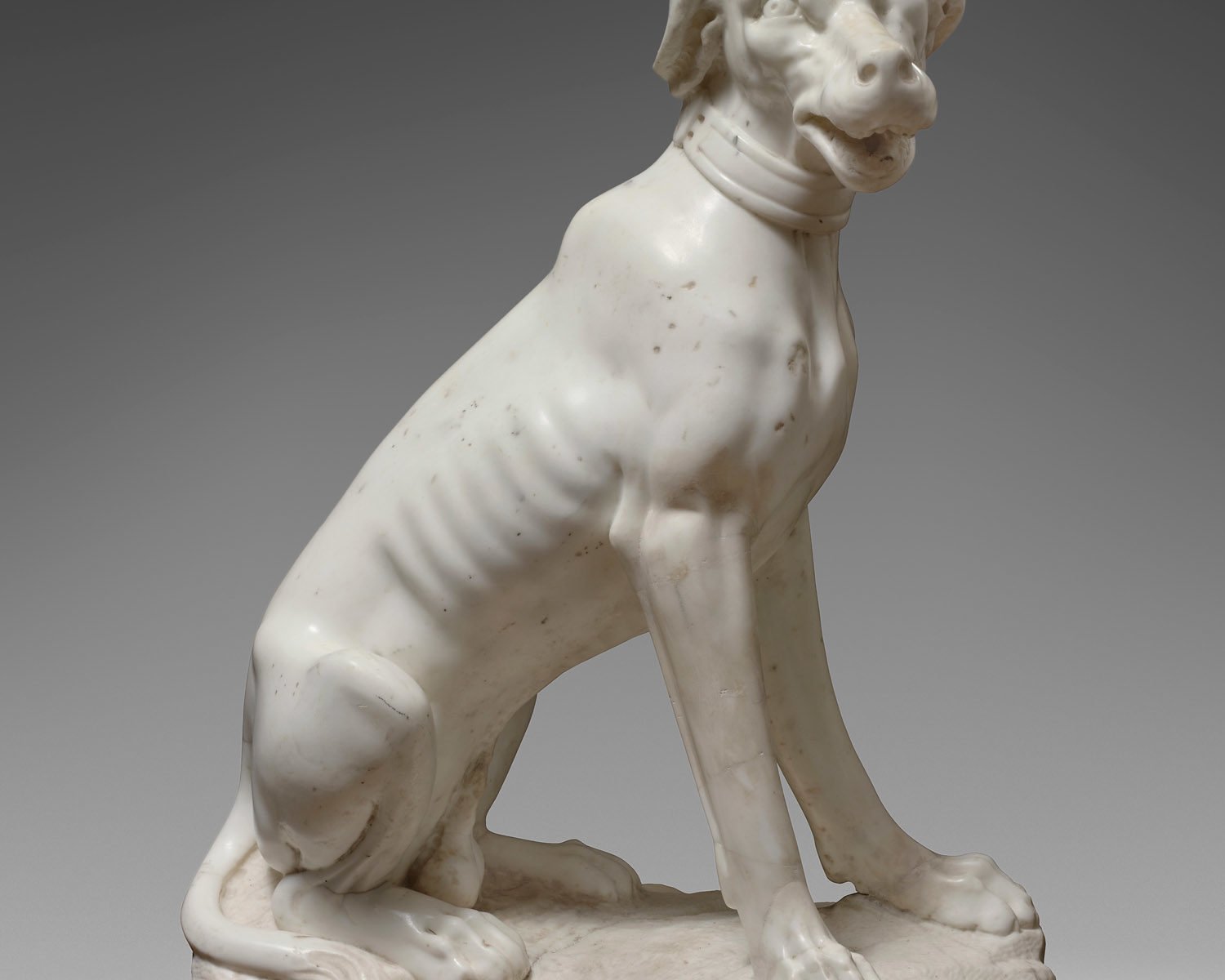
Two exceptional sculptures of sitting dogs in white marble
Italy, epoque 17th century
Dimensions : 32,7 in – W : 22,8 in – D : 13 in
and H : 30,7 in – W : 24,8 in – D : 14,5 in
Old restorations
These high-quality dogs, kept in remarkable condition, are similar to those found in "The Cave of Animals" in the garden of the Medici villa of Castello, in Milan, and dated from the third quarter of the 16th century.
Milano profana nell’eta dei Borromeo, by Alessandro Morandotti, Electa 2005 edition, illustration p124. (see illustration)
On retrouve également des chiens du XVIème siècle dans l’exceptionnelle collection d’animaux sculptés du Vatican à Rome. La salle des animaux abrite quelques chiens d’une remarquable qualité, auxquels nous pouvons comparer les nôtres.
Il serraglio di Pietra. La sala degli animali in Vaticano, Edizioni Musei Vaticani : inv 490/ cat 40 – inv 425/cat 140 – et inv 431,cat 159. (voir les trois illustrations)
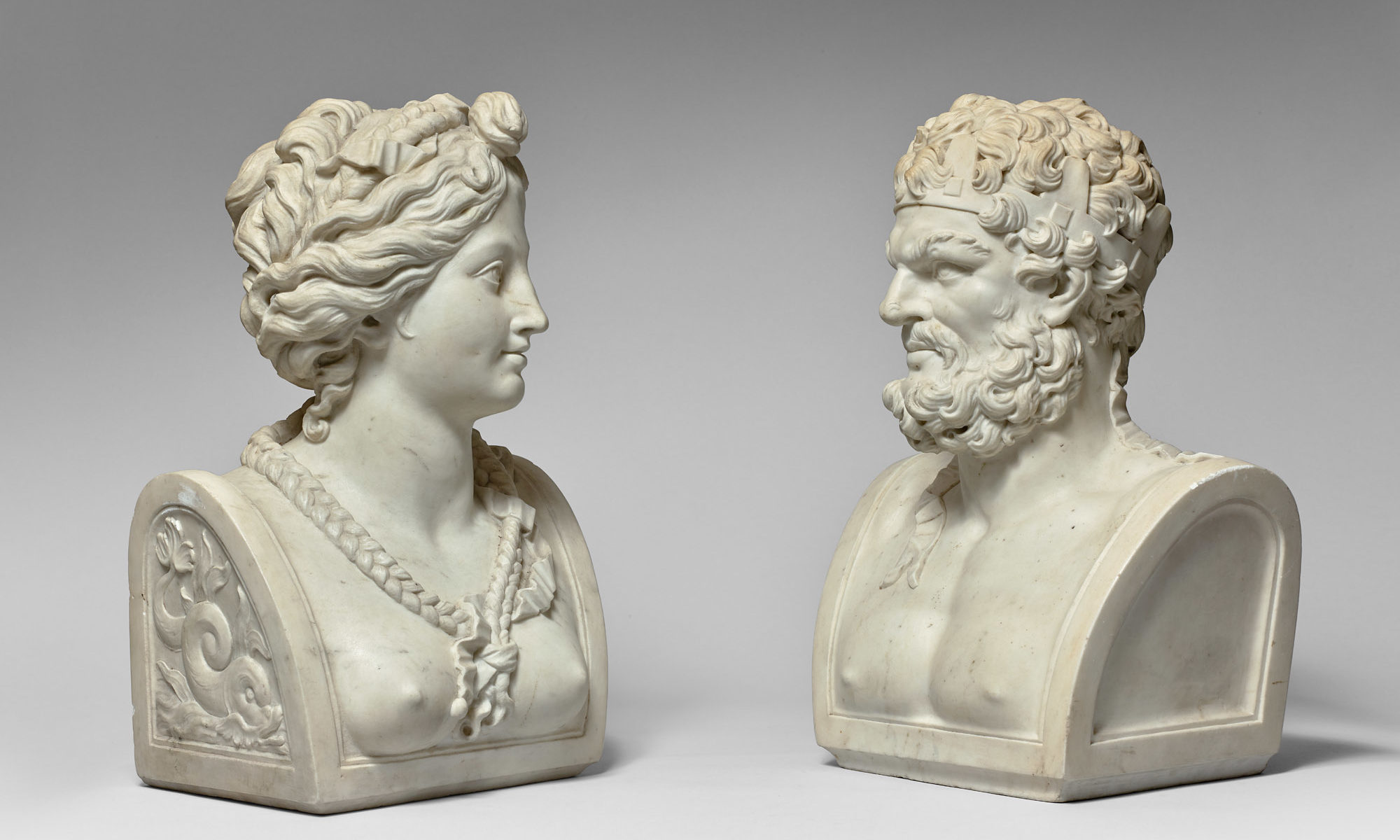
White marble
France, epoque second half 17th century
Dimensions woman : H : 18,9 in – W : 12,2 in – D : 8,3 in and the man : H : 18,9 in – W : 13 in – D : 8,3 in
Those busts are attributed to the french sculptor Antoine GIRARDIN, or GERARDIN (Paris 1647- ?)
He studied at the Academy from 1686 to 1690, where he received several awards, including the first prize in 1688. Despite this, there are few traces of orders.
Le Musée de Rennes conserve dans ses collections quatre bustes en hermès qu’il réalisa, signés au dos A. GERADIN F.1694, et représentant un jeune homme, une jeune femme, Bacchus, et Silenus. La grande similitude dans le traitement de nos œuvres et celui de la suite appartenant au musée peut nous laisser supposer qu’ils sont tous issus de la même commande. (voir reproduction)
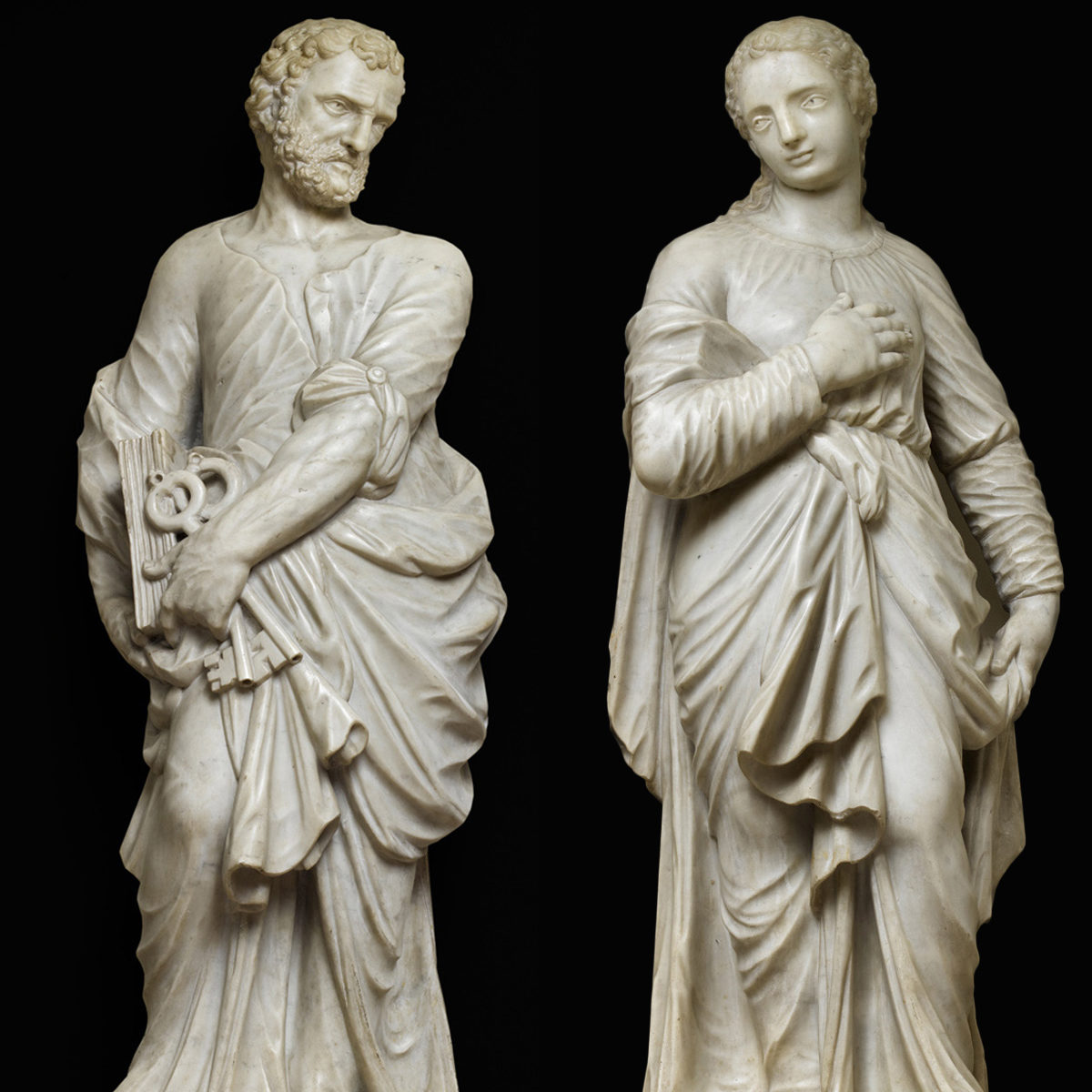
Statues of Saint Peter and Saint Florence in white marble. On the bases are inscribed "S. Pietro M." and "S. Florenza V."
Dimension: H: 40,15 in
18th century period.
Attributed to Giovanni Maria MORLAITER (Venise, 15/02/1699 – 22/02/1781), Venetian school.
Saint Peter is very easily recognizable by his attributes, a book and two keys, one in gold, celestial and the other in silver, earthly, which allows him to open and close the doors of Paradise.
Sainte Florence est plus énigmatique. Elle est représentée sous les traits d’une jeune fille aux cheveux dénoués, portant la main sur le coeur. Trois saintes sont connues sous ce vocable: Sainte Florence d’Agde, Sainte Florence de Carthagène, et Sainte Florence de Comblé.
Chaque statue est un monolithe de marbre blanc, conçu pour être vu en contre-plongée. L’artiste a accentué les membres supérieurs, et soigné les « dessous » des drapés aux plis étudiés. Sainte Florence, douce et apaisée, retient sa toge d’une main dans un léger contrapposto, esquissant un pas, l’autre main sur le cœur.
Saint Pierre donne par opposition une impression de fermeté, renforcée par un regard plus sévère. Les deux saints sont vêtus à l’antique, de simples broches ou fibules retenant les étoffes.
If the pose, very static, with slightly inclined heads, resumes medieval cannons, the elegant and mannerist treatment of the fabrics with folds softened, without frank breaks, and the treatment of the hands of St Peter, all these elements allow us to attribute these works to Giovanni Maria Morlaiter, considered one of the greatest Venetian sculptors of the 18th century.
La richesse du matériau, marbre blanc fort onéreux, peut laisser présumer que ces sculptures étaient destinées à la chapelle peut-être privée d’un important commanditaire.
Giovanni Maria Morlaiter :
He was a founding member of the Accademia of arts in Venice.
Almost all the sculpture in the church of the Gesuati, Venice is the work of Morlaiter, a real masterpiece. A few historians in Art describe him as one the best sculptors. Hugh Honour describes him as "one of the ablest sculptors in eighteenth century in Venice"[1] and Semenzato as "the most brilliant interpreter of the rococo in Venetian sculpture". There is more of his work in the church than anywhere else in Venice.[2]
His first work for the church was the Glory of Angels (1738) on the second altar on the right, and after this Massari engaged him for all the other principal works of sculpture, ending with the statue of Melchisedek (1755). Clockwise from the entrance, the statues in six niches and coupled bas reliefs above are: Abraham (1754) and Jesus and the Centurion (1754); Aaron (1750) and Jesus heals the blind (1750); Glory of Angels (1739); St Paul (1745) and Jesus appears to Magdalen (1743); Christ appears to doubting Thomas (1747; no niche); Baptism of Jesus (1746); St Peter (1744); Christ and Samaritan at Well (1744); Moses (1748–50) and Healing of Paralytic (1748–50); Melchisedech (1755) and St Peter walks on water (1755).
Other works from him which can be seen in two other churches in Venice :
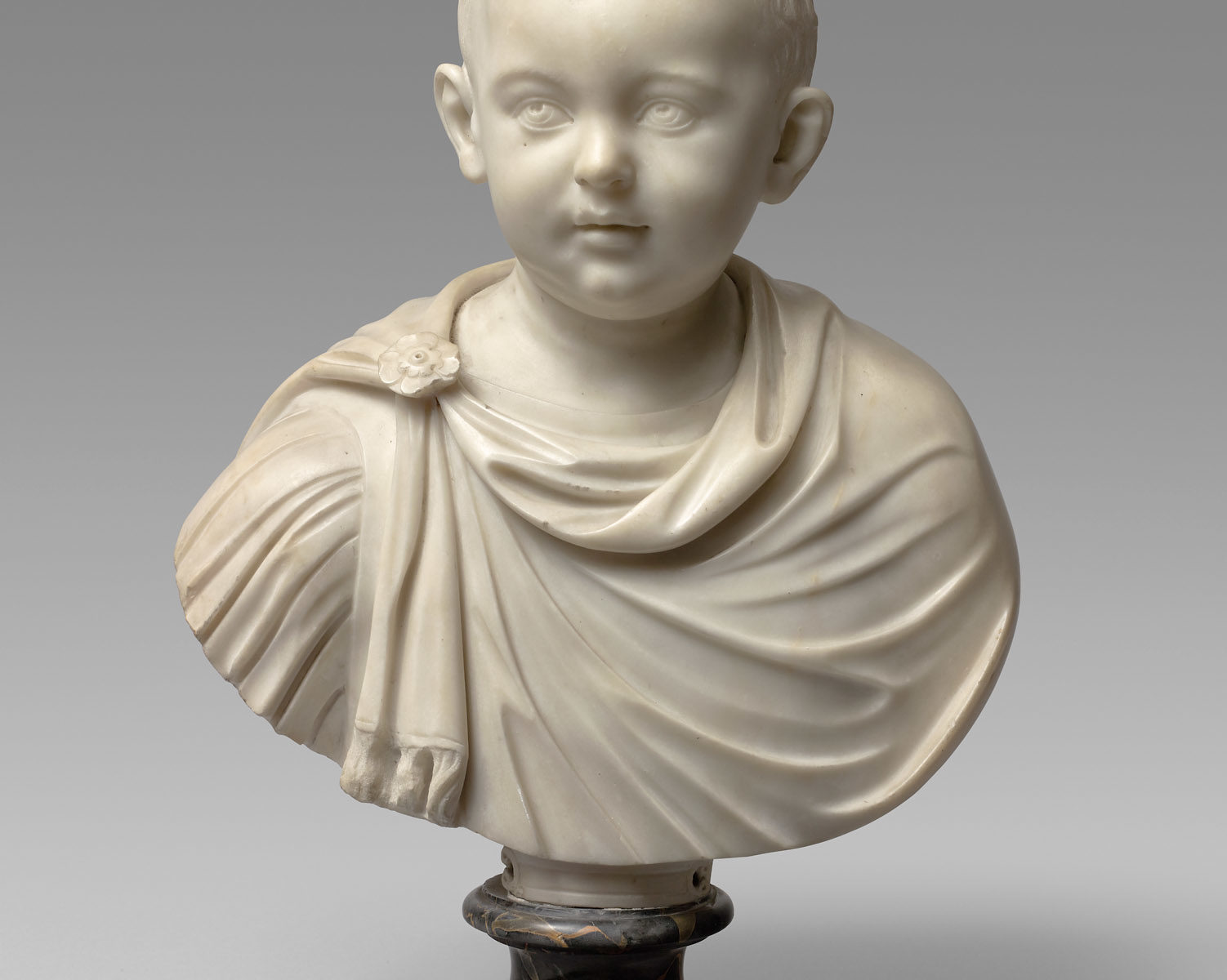
Bust of Britannicus the younger (12 février 41- 11 février 55)
Buste d’après l’Antique, en marbre blanc sculpté, reposant sur un piédouche en marbre Portor mouluré.
Italie, époque fin du XVIIIème siècle.
Dimensions : H : 20 in – W : 14 in
Britannicus is the son of Emperor Claudius and his third wife Valeria Messalina. Heir direct of the Emperor Claude, he died poisoned the day before his fourteen years. The story designates Nero, his adopted brother, as the sponsor of this assassination.
The Louvre keeps a marble sculpture presenting « The Empress Messaline carrying the child Britannicus ». 45 ap JC, near Rome, inventory MR280.
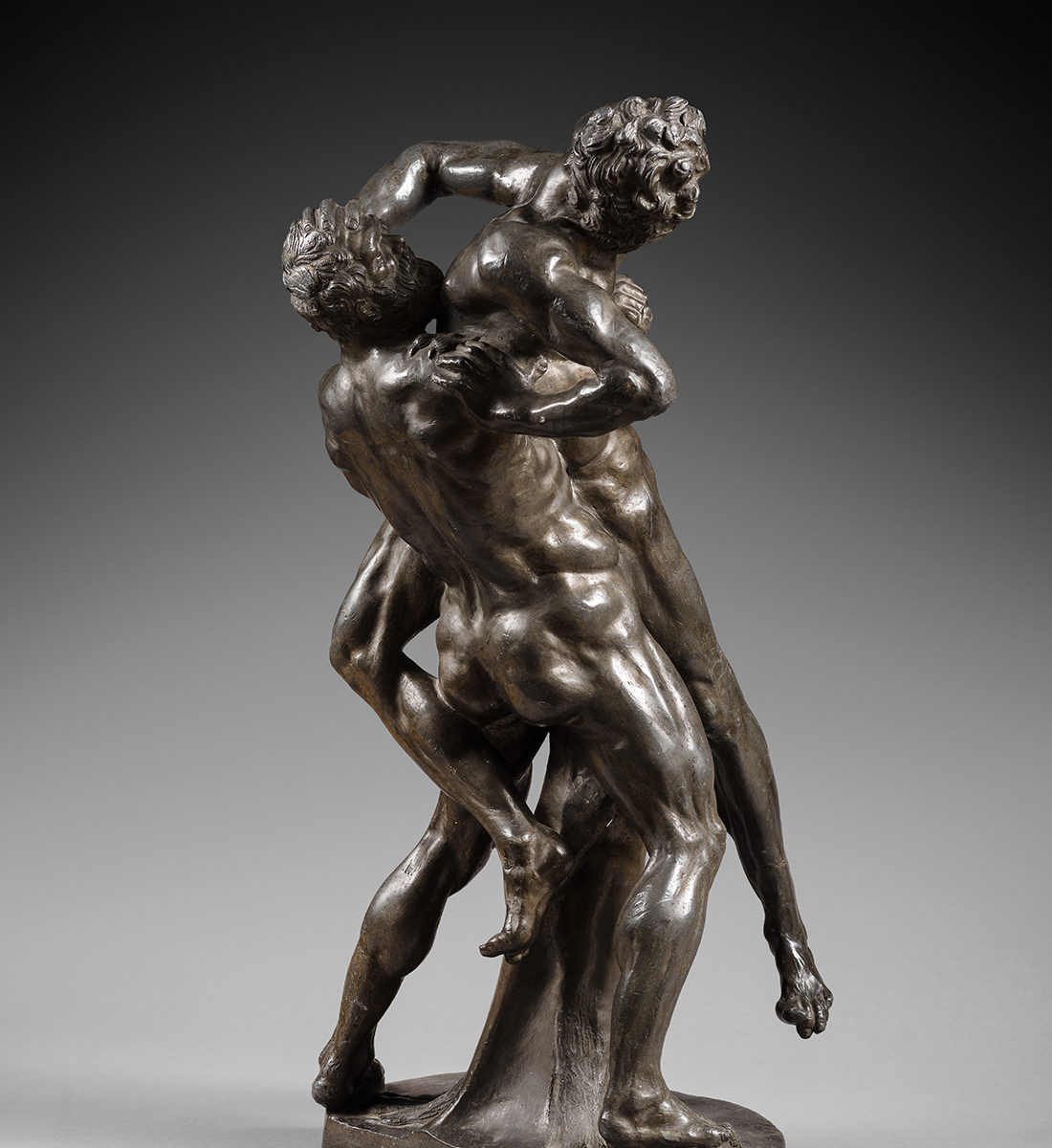
Rare group carved in lead.
Italy , late 17th century
D’après le modèle de Stefano MADERNO (1576-1636)
H 60 cm L 31 cm P 26 cm
Hercule soulève Antée afin qu’il ne touche plus le sol.
The story
Antaeus, king of Libya, was the son of Poséidon et de Gaia la Mère-Terre, mais certains affirment que Gaia l’aurait conçu toute seule. Antée était un géant vivant dans une caverne située sous une falaise, qui se nourrissait de chair de lion et dormait à même le sol afin de conserver et d’accroître sa force colossale. Ses facultés à pouvoir prendre des forces lorsqu’il était en contact avec la Terre (Gaïa étant sa mère) le rendaient invincible. Sans pitié, celui-ci forçait les étrangers qui pénétraient sur son territoire à lutter contre lui jusqu’à épuisement, pour ensuite les tuer. Il exhibait ensuite leur dépouille sur le temple paternel.
On ne sait pas si c’est Héraclès, décidé à mettre fin à cette pratique barbare, qui défia Antée ou si c’est Antée qui défia Héraclès. Les deux pugilistes se préparèrent au combat: l’un et l’autre ôtèrent leur peau de lion, puis alors qu’Héraclès s’enduisait d’huile à la manière olympique, Antée se versait du sable chaud sur les membres afin d’accroître son contact avec la terre.
Héraclès avait décidé de ménager ses forces et de fatiguer Antée, mais, après l’avoir projeté sur le sol de tout son long, il fut stupéfait de voir ses muscles régénérer par la Terre-Mère. Les deux adversaires se prirent à nouveau à bras-le-corps et Antée se jetait volontairement sur le sol pour reprendre des forces ; Héraclès, comprenant alors sa manœuvre, le souleva de terre, lui brisa les côtes, et, malgré les terribles gémissements de la Terre-Mère, le maintint en l’air jusqu’à ce qu’il expiât.
La dépouille massive d’Antée fut ensevelie par Héraclès sous la colline du Charf près de Tanger, ville qui aurait été fondée par le fils d’Héraclès, Tingis, et de la femme d’Antée qui se nommait Tingé.
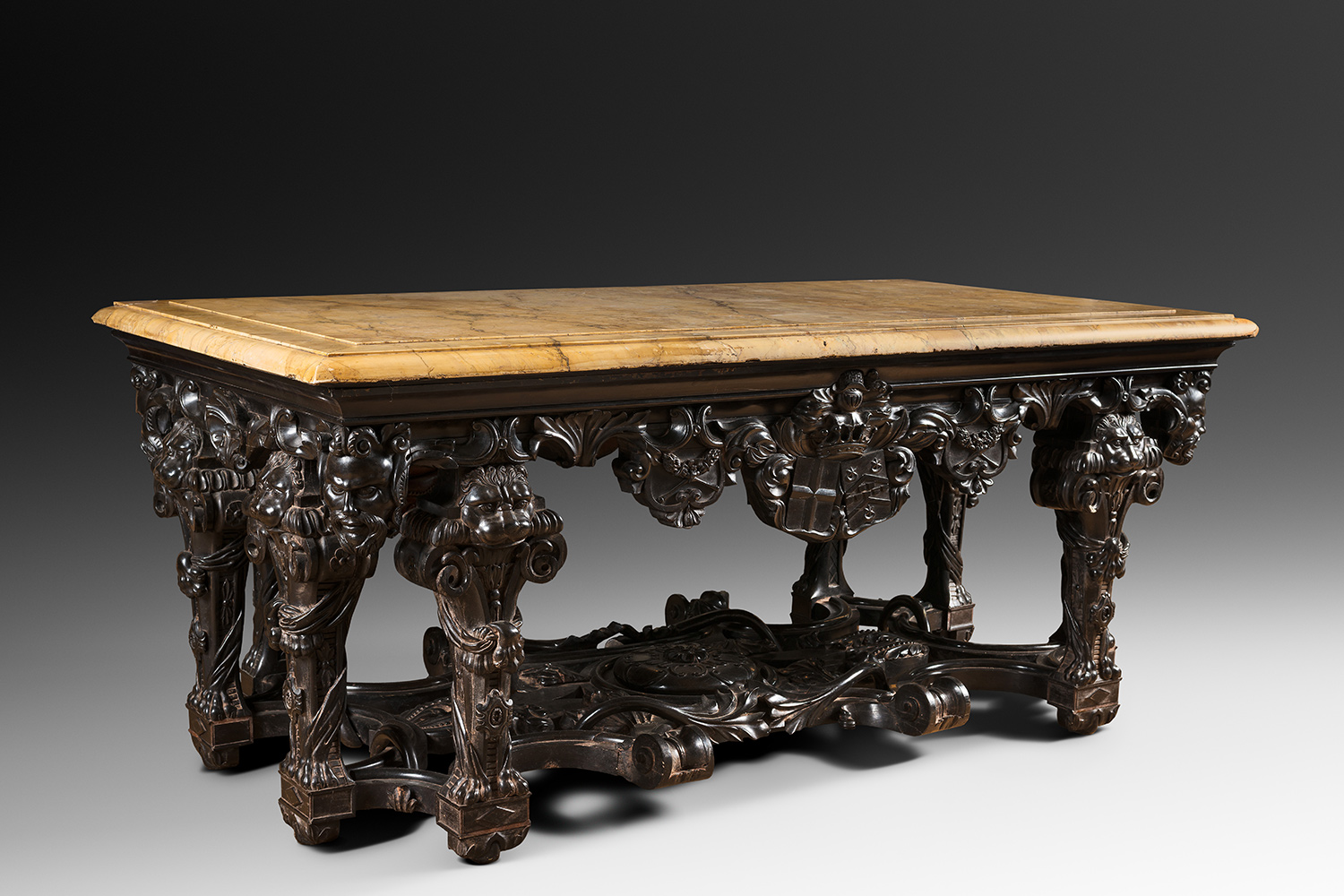
Rectangular shaped center table, the openwork frieze with a central medallion ornamented by armories, raised on eight square tapered legs carved with impressive lion’s heads and feets, joined together by an openwork stretcher with stylized foliage.
Corbin's beak marble top.
The Netherlands, 19th century
Provenance : copper plate under the top inscribed « DW Beckerman Arnhem »
Dimensions: H : 29,5 in – W : 71,2 in – D : 38,5 in
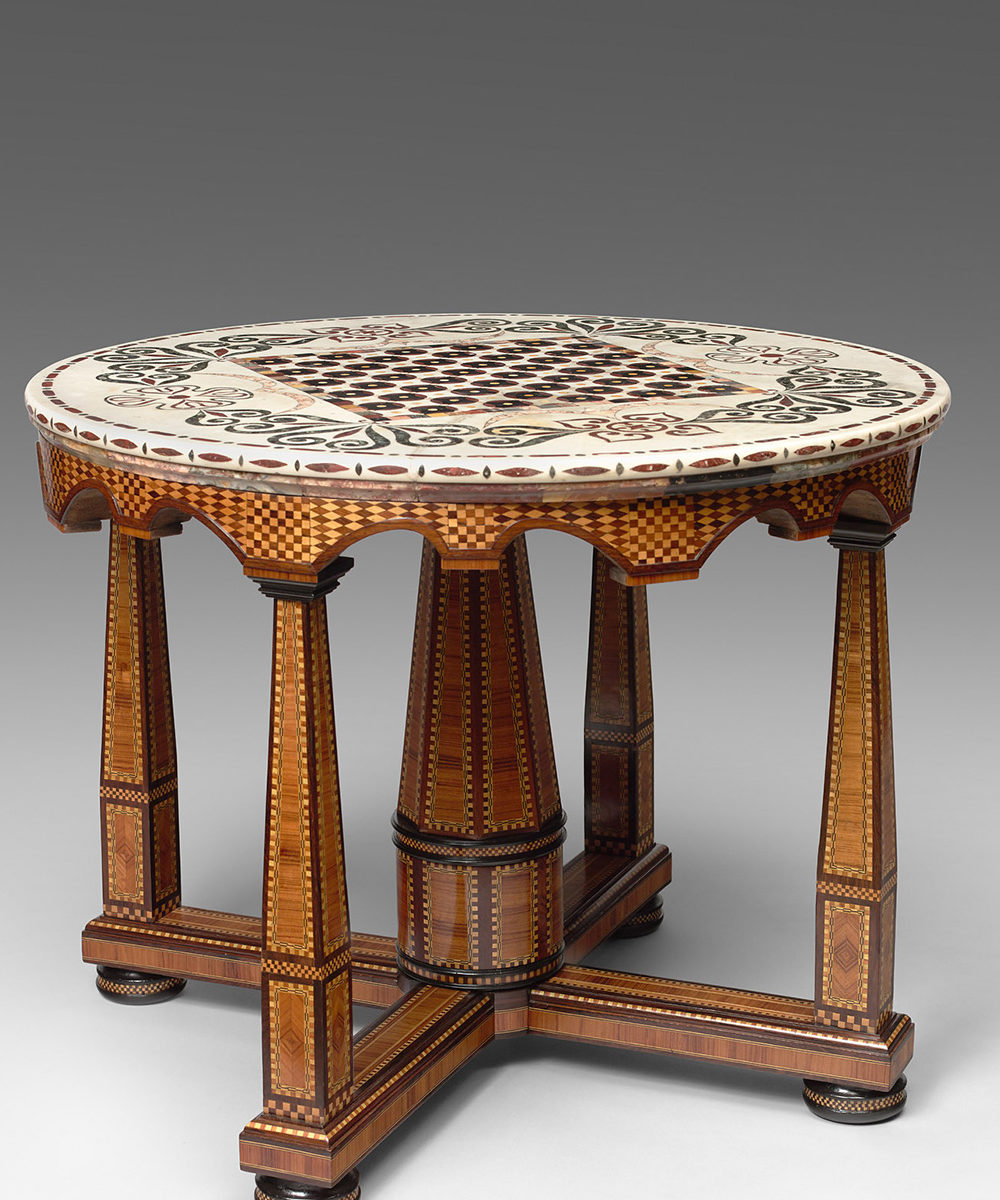
Circular pedestal table, the marble marquetry top with geometric decoration surrounded by stylized interlacing; it rests on a finely inlaid wooden base, the central bole surrounded by four tapered sheath legs linked together by an X-shaped spacer, all on flattened balls.
It presents many essences of precious wood: the belt and the spacer are in solid poplar wood - the cross under the tray is in elm - the marquetry uses rosewood, sycamore, maple - the feet have tinted sycamore and wood of pink - the balls are in stained walnut
Italy, Epoque first half of 19th century
Dimensions: H : 28,7 in – D : 35,6 in. 73 cm – Diam : 90,5 cm.
NB: The top has been restored

