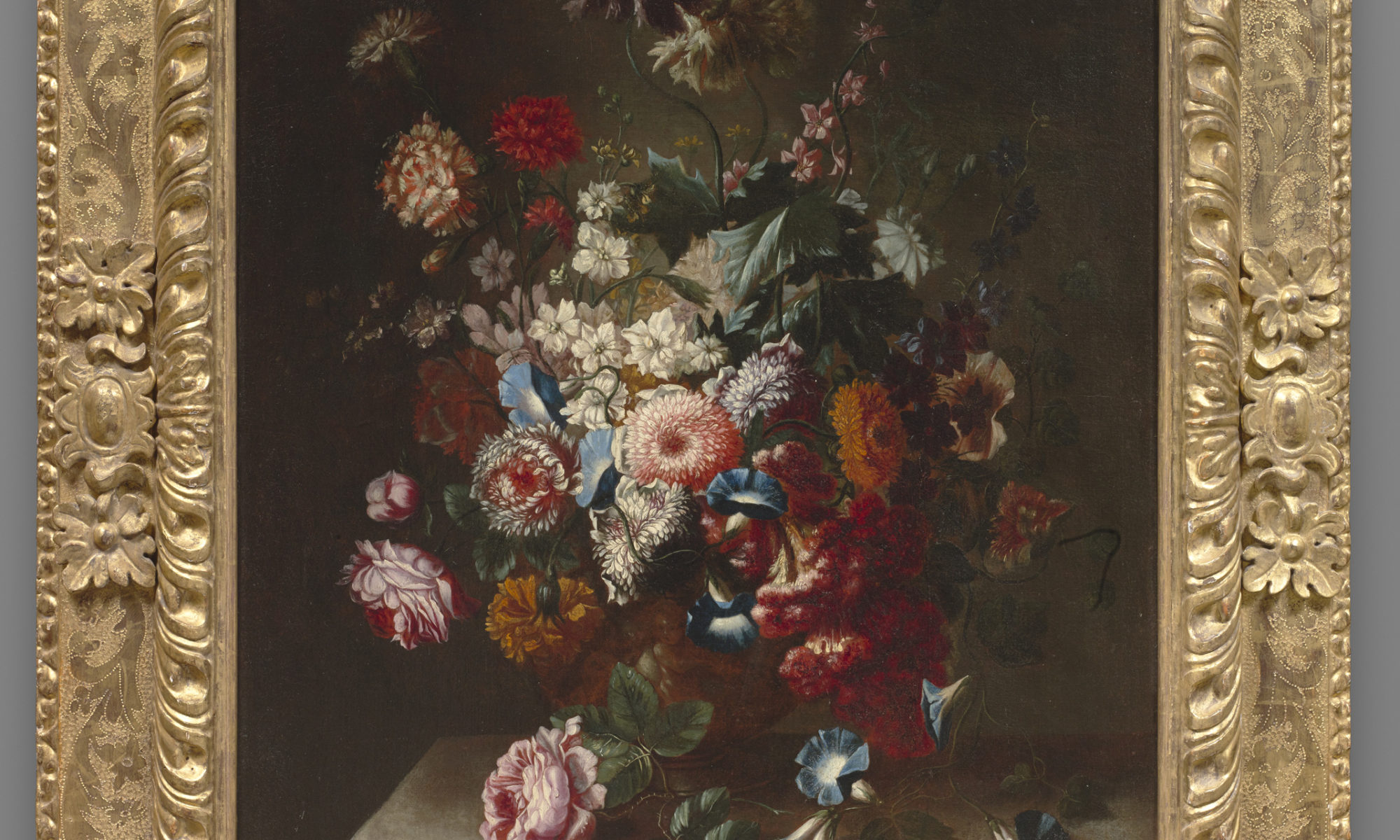
Bunch of flowers - Karel van VOGELAER (1653-1695) Attributed to

Bouquet de fleurs dan un vase sur un entablement . Attribué à Karel van VOGELAER (Maastricht 1653-1695Rome). Huile sur toile. Dans un cadre en bois sculpté doré. Epoque 17ème siècle, cadre d’époque 18ème siècle.

Dimensions : H37,8 - W28,3 in - Enframed H50,4 - W40,9 inches

Painter mainly active in Italy, where he was recognized for his talents as a flower painter and called "Carlo dei Fiori". His works belong in many museums such as The Borghese Gallery in Rome, the Liechtenstein Gallery in Vienna, the Stockholm Museum, and the Hanover Museum.

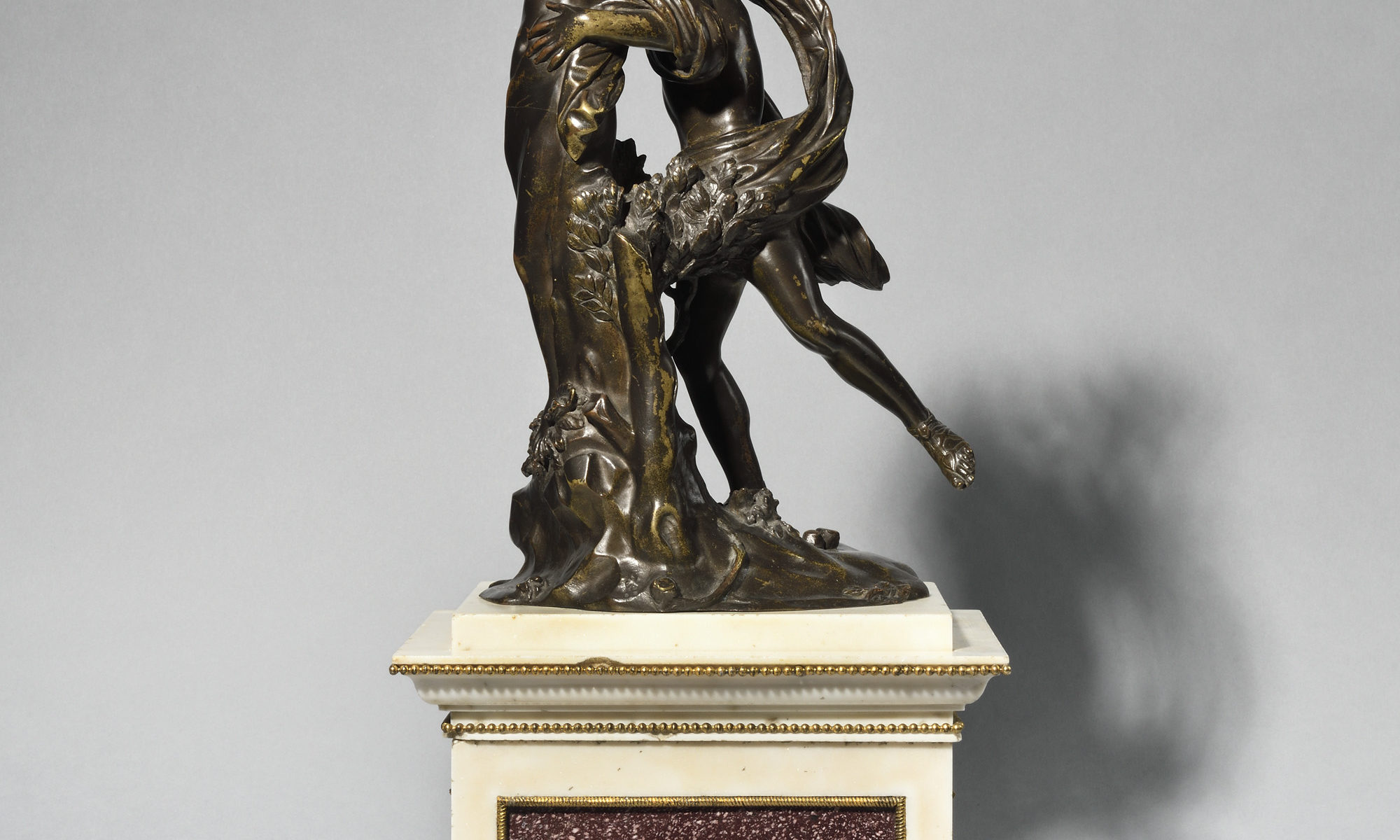
Apollon and Daphne - Attributed to Francesco RIGHETTI (1745-1813)- Rome late 18th century

Apollo and Daphne, sculpture in bronze with brown patina. Resting on a rectangular base in white marble and Egyptian porphyry, underlined by bronze friezes.

Dimensions : Sculpture : H15,5 - W8,7 -D6,3 in - With the base : H25 - W10,4 - D8,7 in

Francesco RIGHETTI was the pupill of the famous Roman bronzier Luigi VALLADIER (1726-1785). He received the patronage of Catherine II of Russia, Popes Pius VI and Pius VII, and took over from his master Valladier as the director of the Vatican foundries from 1805. The quality of his work earned him commissions from the greatest collectors of his time including Camille Borghese and Pauline Bonaparte, sister of the First Consul. In 1805 he took over from his master Valladier as director of the Vatican foundries, assisted by his son Luigi.

From 1794 Francesco Righetti listed in a catalog all the works he produced with their detailed selling prices, which included Apollo and Daphne.

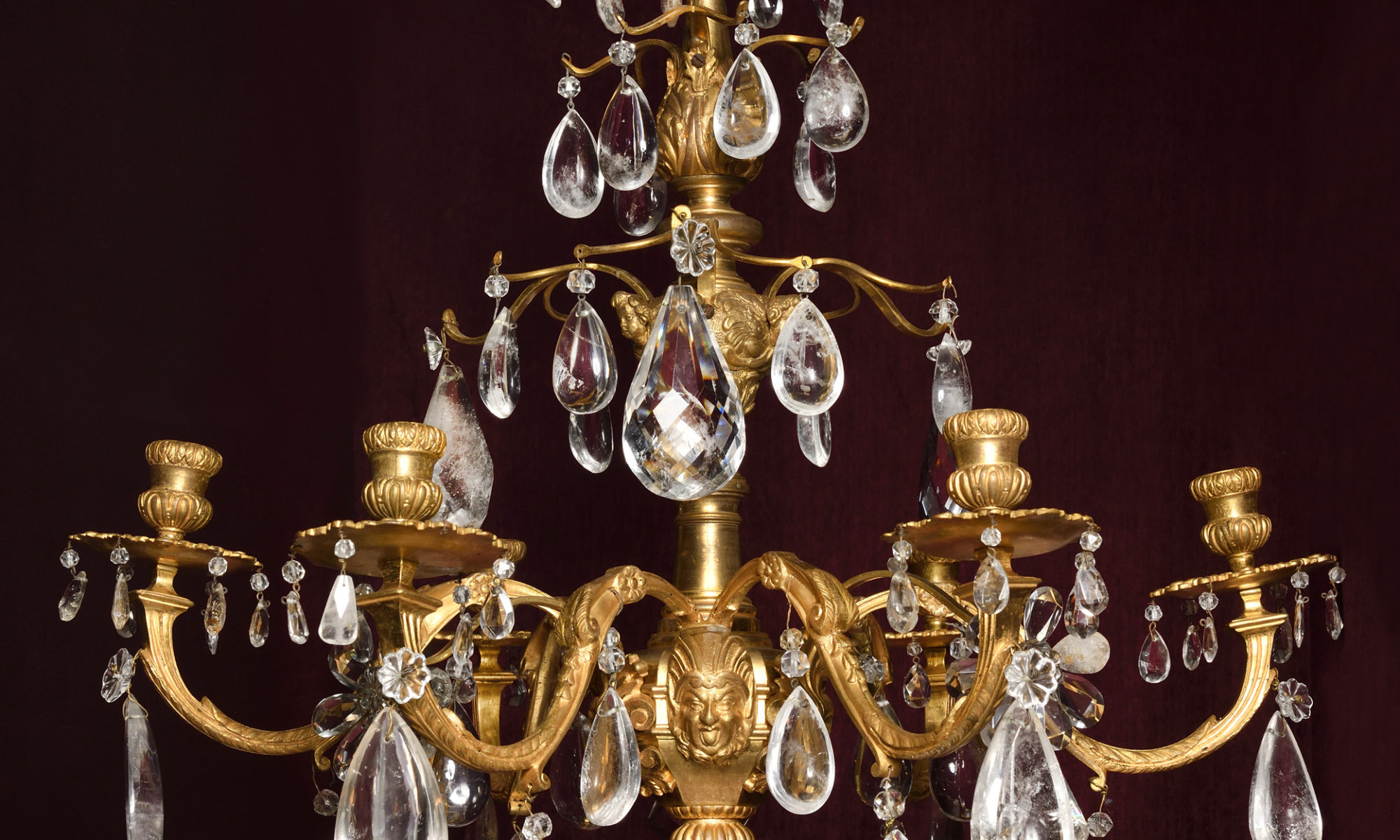
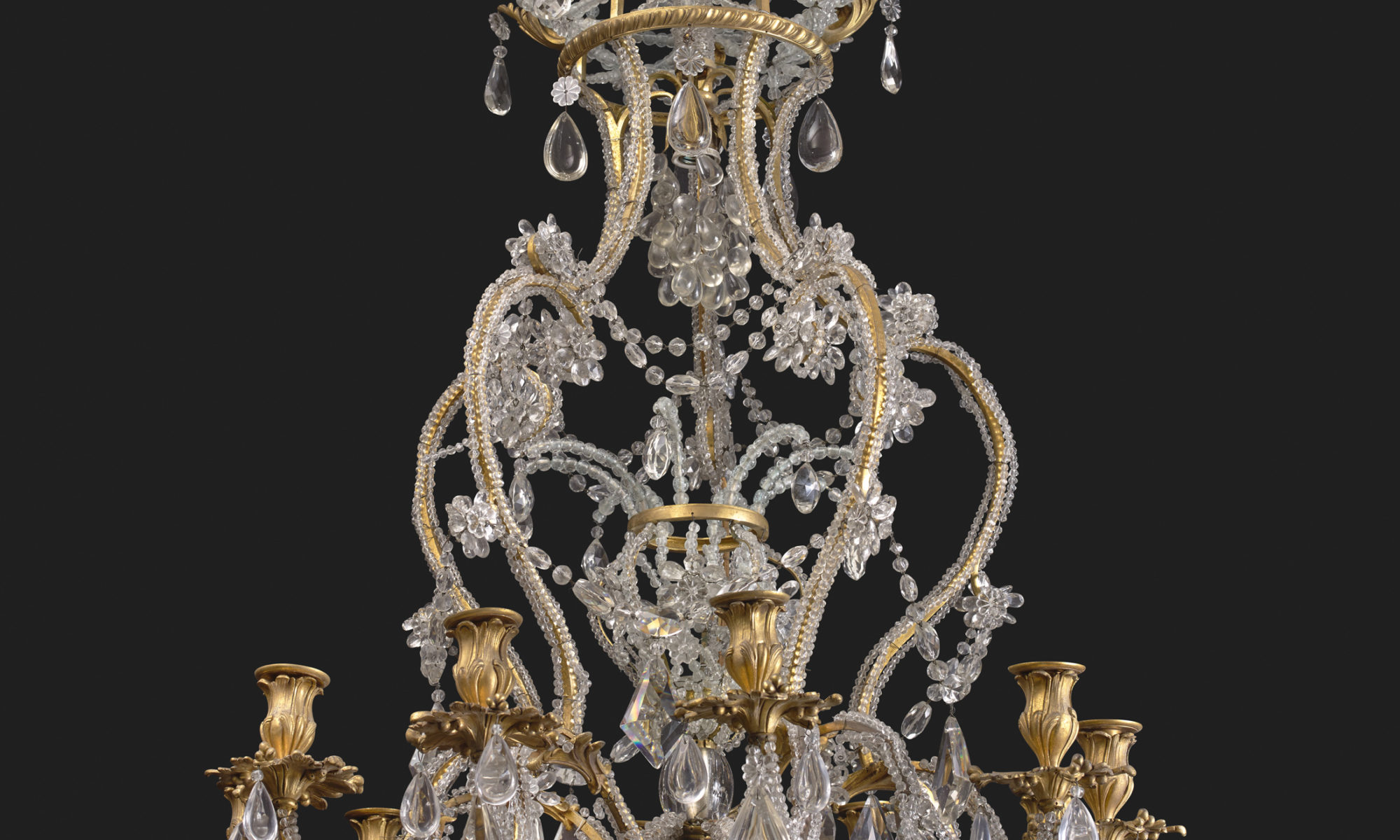
A gilt bronze and pearls ten-light chandelier - Epoque late 19th century

A Louis XV style ten-light chandelier in gilded and chiseled bronze, headed with a corona, the curved candlearms issuing drip-pans and bobeches with foliate scrolls in a rocaille style ; ornamented with pearls and drops. The ball final changed. 

Epoque late 19th century

Dimensions : H47,3 in - D30,3 in. Fitted for electricity.

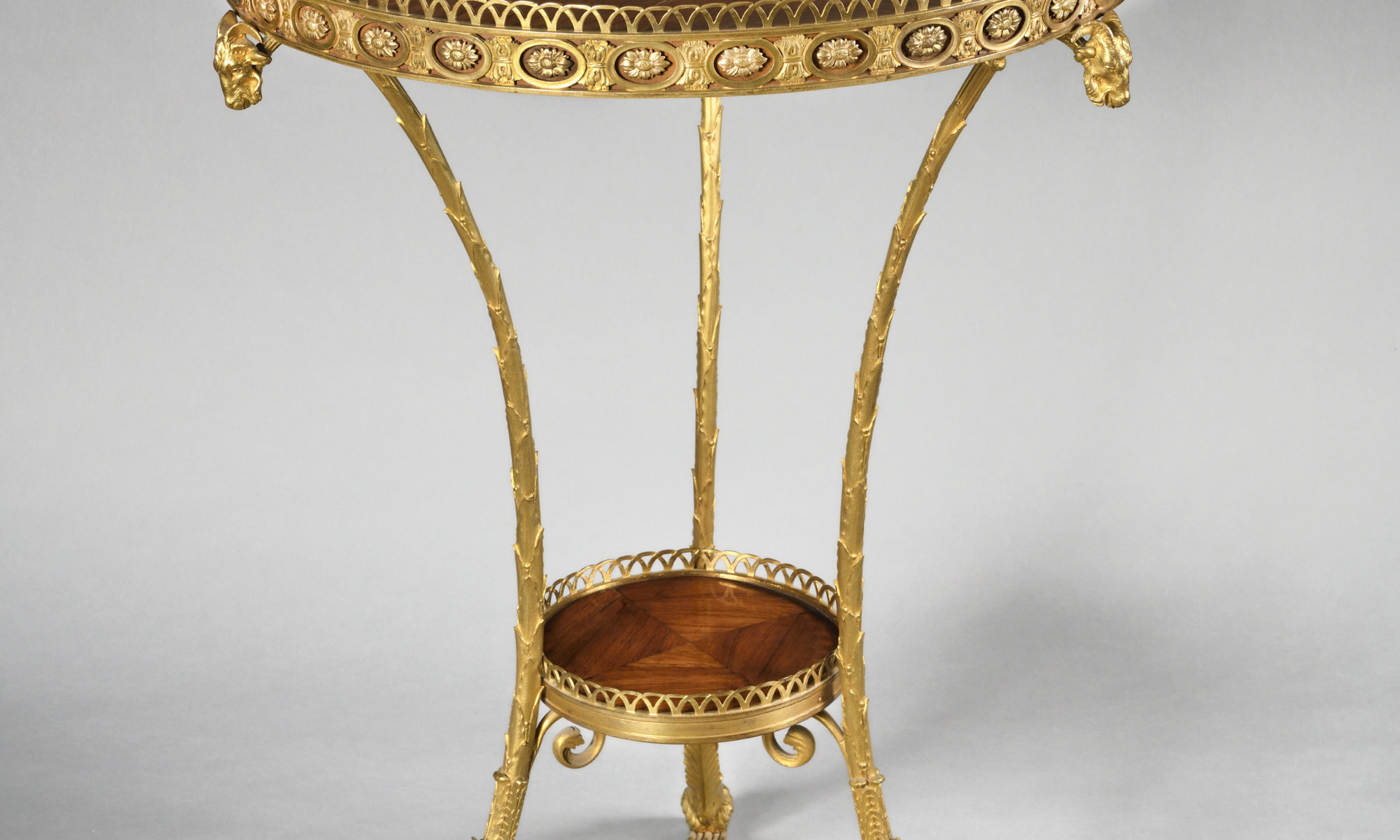
Tripod pedestal, early 19th century

Exceptional tripod pedestal table

Les plateaux de forme circulaire en placage de bois satiné, cintrés d’une galerie en bronze ciselé doré ajouré, le plateau supérieur à décor de fleurs dans des cartouches entrelacés ; sur trois pieds incurvés surmontés d’une tête de bélier, et terminés par des sabots de cervidés, reliés entre eux par une entretoise de forme triangulaire agrémentée d’un bouquet central.

Le tout est d’une qualité de réalisation remarquable, tant dans l’assemblage des éléments, que dans la finesse de la ciselure.

Provenance : Probably Russian

Epoque : first quarter of 19th century

Dimensions : H : 31 - Diam : 22,8 inches

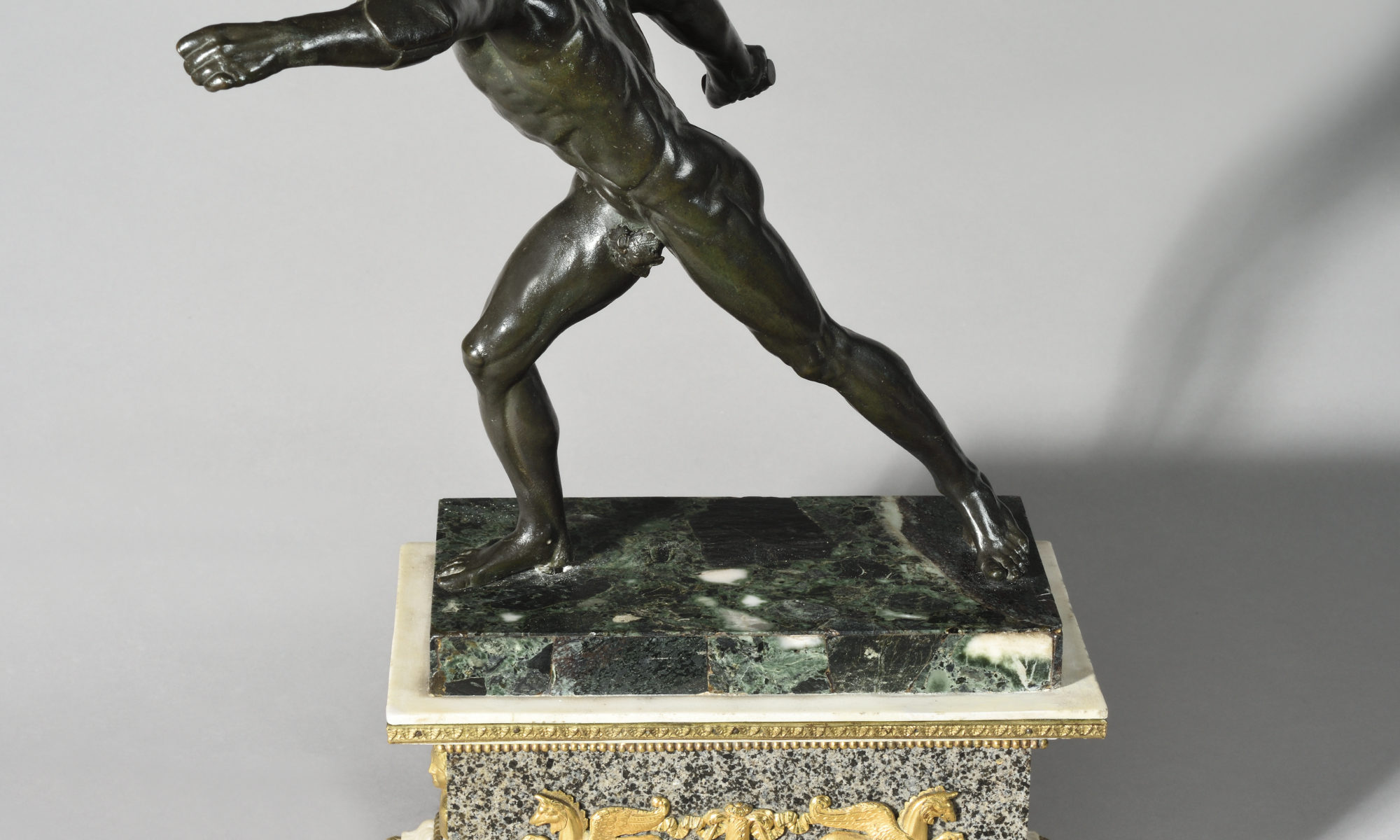
Attributed to Francesco RIGHETTI (1745-1813)- The Borghèse gladiator. Roma circa 1794

Borghese Gladiator. Bronze with brown-green patina, on a plinth in Verde Antico marble, and a rectangular base in white Carrara marble and gray granite, ornamented by bronze friezes.

Dimensions : the bronze : H : 11 - W : 11,4 - D : 10,2 inches - Entiere : H : 18,5 - W : 10,6 - D : 6,3 inches

Provenance: Probably acquired in Roma by Cardinal Antonio Despuig Dameto (1745-1813), then by descent in the collections of the Counts of Montenegro, Raixa; then collection of Juan Truyols Rovira (1973-2006), in his property of Predio Morelli, Majorca.

Francesco RIGHETTI was the pupill of the famous Roman bronzier Luigi VALLADIER (1726-1785). He received the patronage of Catherine II of Russia, Popes Pius VI and Pius VII, and took over from his master Valladier as the director of the Vatican foundries from 1805. The quality of his work earned him commissions from the greatest collectors of his time including Camille Borghese and Pauline Bonaparte, sister of the First Consul.

Dating from the Hellenistic period, this sculpture was unearthed during excavations carried out in Antium, Italy. It takes its name from the famous collection of Cardinal Borghese, and will be one of the works subsequently acquired by Napoleon 1st, and kept in the Louvre museum. (INV No. MR 224). Like many sculptures from Ancient Greece, this Gladiator will be used by the great bronziers at the end of the 18th century to decorate the collections of scholars performing their Grand Tour, and it appears in Righetti's catalog from 1794.

Biblio : A.Pasquier « Le gladiateur Borghèse ou la gloire d’un soldat inconnu », d’après l’Antique, cat. expo musée du Louvre, Paris, 2000, pp 276-277.
en_GB